Cash Is King — Especially When Markets Are Extended
By Harsh Shah · Updated
Disclaimer: This content is for educational purposes only and should not be considered financial advice.
Investing is a lot like shopping.
If a pair of Nike shoes normally sells for $100 and one day goes on sale for $50, that’s an obvious buy.
But here’s the real question:
If that discount shows up and you’re already fully invested — can you actually take advantage of it?
That’s where cash matters.
Now flip the situation.
If you bought 10 pairs of those shoes at $50 and someone suddenly offers you $100 for each, would you sell?
Absolutely.
Because you understand value — and because having cash allows you to reset, book profits, and be ready for the next opportunity.
Remember this:
No one ever went broke booking profits.
The stock market works the same way.
This mindset shift is something I’ve learned over time — and it’s changed how I invest.
One of the Hardest Lessons in Investing
One of the hardest lessons in investing isn’t learning how to trade.
It’s learning when not to.
We’re conditioned to believe that money should always be working — always deployed, always chasing the next move. But the truth is simpler and far more powerful:
You don’t always need to be in a trade to make progress.
Sometimes, the smartest position is cash.
You Don’t Get Paid for Activity
Markets reward patience, not constant action.
There are periods when:
- Stocks are extended
- Risk is elevated
- Upside is limited
- Downside is asymmetric
In those environments, forcing trades usually leads to poor outcomes.
Sitting in cash is not “doing nothing.”
It’s choosing optionality.
Cash gives you flexibility.
It gives you clarity.
And most importantly — it gives you dry powder when real opportunities show up.
Cash Isn’t Idle Anymore
The old argument against holding cash was simple:
“Cash earns nothing.”
That’s no longer true.
Today, cash parked in money-market funds or high-yield savings can earn ~4% annually, with virtually no volatility.
That means:
- You’re getting paid to wait
- You’re preserving capital
- You’re avoiding unnecessary risk
Earning 4% with zero stress beats chasing risky trades in extended markets.
Index Investing Is Great — But FOMO Is Not
Long-term, index investing works.
And eventually, yes — I like to DCA into indexes. It’s one of the best long-term strategies out there.
But there’s a big difference between disciplined DCA and emotional FOMO.
When markets are clearly extended, sentiment is euphoric, and risk-reward is poor, forcing buys doesn’t improve long-term results — it just increases drawdowns.
It’s okay to:
- Pause
- Let price cool off
- Wait for better entries
DCA works best when it’s systematic, not reactive.
A Question for Long-Term Investors
If you truly believe you’re a long-term investor, ask yourself this:
Would you panic if META dropped to $85, like it did in 2022?
If the answer is yes, then conviction may not be as strong as you think.
Long-term investing only works when you understand the business deeply — its cycles, risks, and volatility.
Without that conviction, every pullback feels like danger instead of opportunity.
Cash Is a Position
This is the mindset shift most investors need to make.
Cash is not a failure.
Cash is not fear.
Cash is discipline.
It means:
- You respect risk
- You understand probabilities
- You’re waiting for the market to come to you
Some of the best trades don’t start with buying — they start with waiting.
Final Thoughts
Let’s think about this another way.
If you’re a long-term believer in META, and the stock goes from $650 to $1,000, that’s great.
If you’re fully invested, you make roughly 30–40%.
But what if the opposite happens?
What if META drops to $150 because AI bets don’t play out, growth slows, or sentiment flips?
Would you:
- Stay calm?
- Add more?
- Or panic and sell at the worst possible time?
Anything is possible in the markets.
This is why cash matters.
I like to DCA into indexes — I really do.
But sometimes, markets feel overextended (SPY Chart Below since 2020).
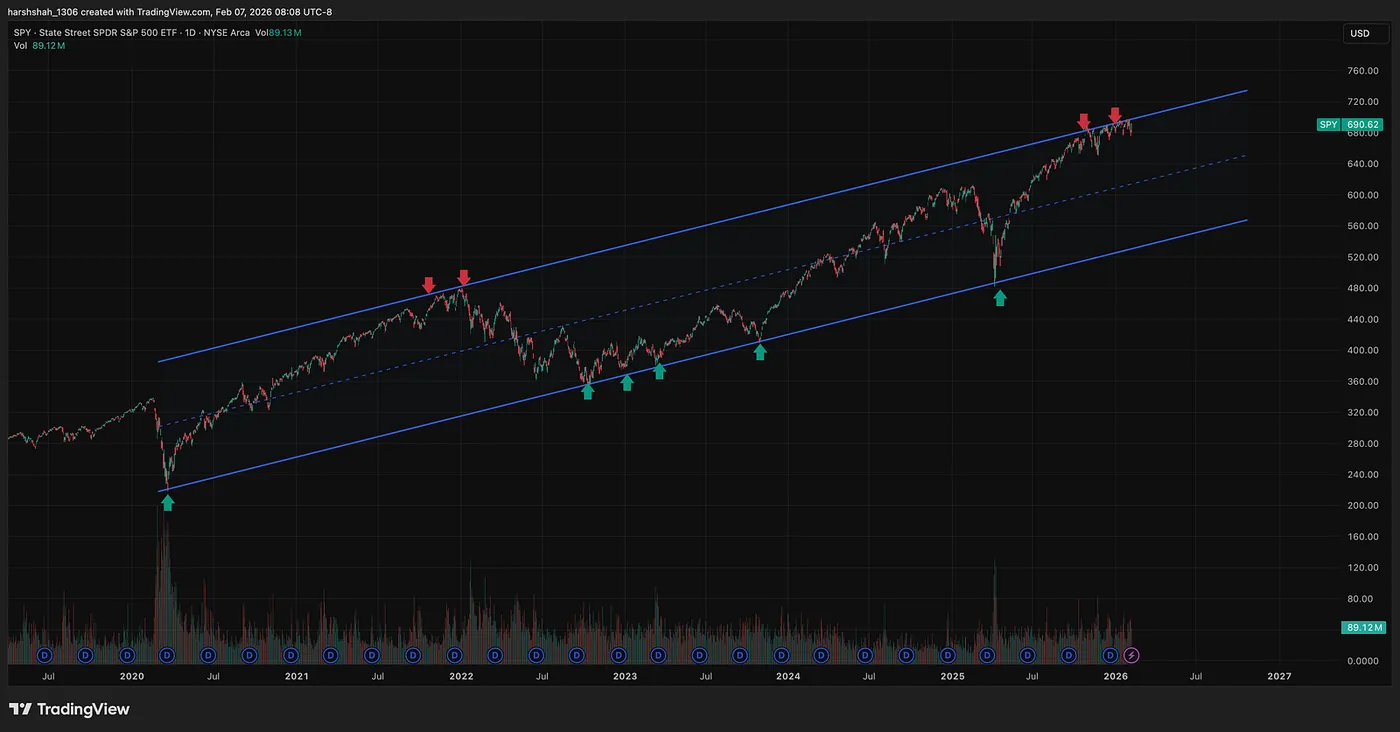
And when that happens, I’m okay waiting.
Even Warren Buffett is sitting on a massive pile of cash right now.
If he can afford to wait —
why do we feel the need to rush in?
Markets will always offer opportunities.
The question is not if — it’s when.
When conditions are favorable, you act.
When they’re not, you wait — and get paid while doing so.
Cash keeps you patient.
Cash keeps you flexible.
And cash ensures that when the real opportunity arrives, you’re ready.
This mindset shift is relatively new to me — but it’s been one of the most valuable lessons I’ve learned.
If you find my blogs helpful and learnt something new about investing, consider following me on Medium to get notified when I publish new articles.