Understanding Moving Averages
SPY +57%, Gold +170%, Google +75% — The Simple Momentum Rule I Use
By Harsh Shah · Updated
Disclaimer: This content is for educational purposes only and should not be considered financial advice.
Have you ever sold a stock… only to watch it go much higher afterward?
You stopped out.
You followed your rules.
And then price exploded without you.
It feels terrible.
You start questioning yourself:
- Why did I exit?
- Was I wrong?
- Should I have held?
I’ve been there too.
I sold out of GOLD after a 30% gain in 2025… only to watch it rally another 170% from there.
But over time, I discovered something surprisingly simple that changed how I look at trends — and honestly, it blew my mind when I first realized it.
👉 Momentum is the difference.
When momentum is strong, trends tend to continue.
When momentum is weak, trades become harder, choppier, and less predictable.
And here’s the simple solution:
Use the 8 EMA and 21 EMA to identify momentum — and simply avoid going long when momentum is weak.
That’s it.
No complicated indicators.
No prediction.
No guessing.
Just align yourself with strength.
The Problem Most Traders Face
One of the biggest frustrations in trading is inconsistency.
Sometimes you buy and the stock runs immediately.
Other times you buy and it goes nowhere… or worse, drops.
The difference is often not the setup.
The difference is momentum conditions.
Many traders ignore this.
They focus only on:
- Patterns
- Support
- Resistance
- News
- Indicators
But they miss the most important variable:
👉 Is momentum actually strong?Without momentum, even good setups fail.
My Rule Is Extremely Simple
Most traders look at where price is relative to moving averages.
I don’t.
I don’t treat EMAs as support.
I don’t buy pullbacks to them.
I don’t care where price is sitting.
I focus on one thing:
The relationship between the 8 EMA and 21 EMA.
My rule:
- 8 above 21 → Momentum strong
- 8 below 21 → Momentum weak
That’s it.
No complexity.
No magic.
Just structure.
Why This Works
The 8 EMA reacts faster to price.
The 21 EMA reacts slower.
When the faster average stays above the slower one, it means buyers are consistently in control over time.
That’s momentum.
And momentum tends to persist longer than people expect.
When the 8 drops below the 21, momentum weakens.
That’s when trades become unpredictable.
The Biggest Mindset Shift
This realization changed everything for me:
I don’t need to predict price.
I just need to participate when momentum is favorable.
So before considering any trade, I ask:
Is the 8 above the 21?
If yes → conditions are supportive.
If no → I stay cautious or stay out.
That alone removes a huge amount of noise.
Why You Sometimes Sell Too Early
Let’s go back to that painful experience — selling before a big move.
Most of the time, momentum was still strong.
But fear made you exit.
Using the EMA relationship gives you an objective reference.
If momentum remains strong, you gain confidence to stay with the trend.
If momentum weakens, you have a reason to reduce risk.
It removes emotional decision-making.
When I Avoid Trades Completely
Weak momentum environments look like:
- 8 and 21 crossing repeatedly
- EMAs flattening
- No separation between them
- Choppy price behavior
These are dangerous conditions.
Even experienced traders struggle here.
The best decision is often:
👉 Do nothing.
And doing nothing is a strategy.
Real Examples (Momentum vs Weakness)
Below are multiple examples showing how powerful this concept is.
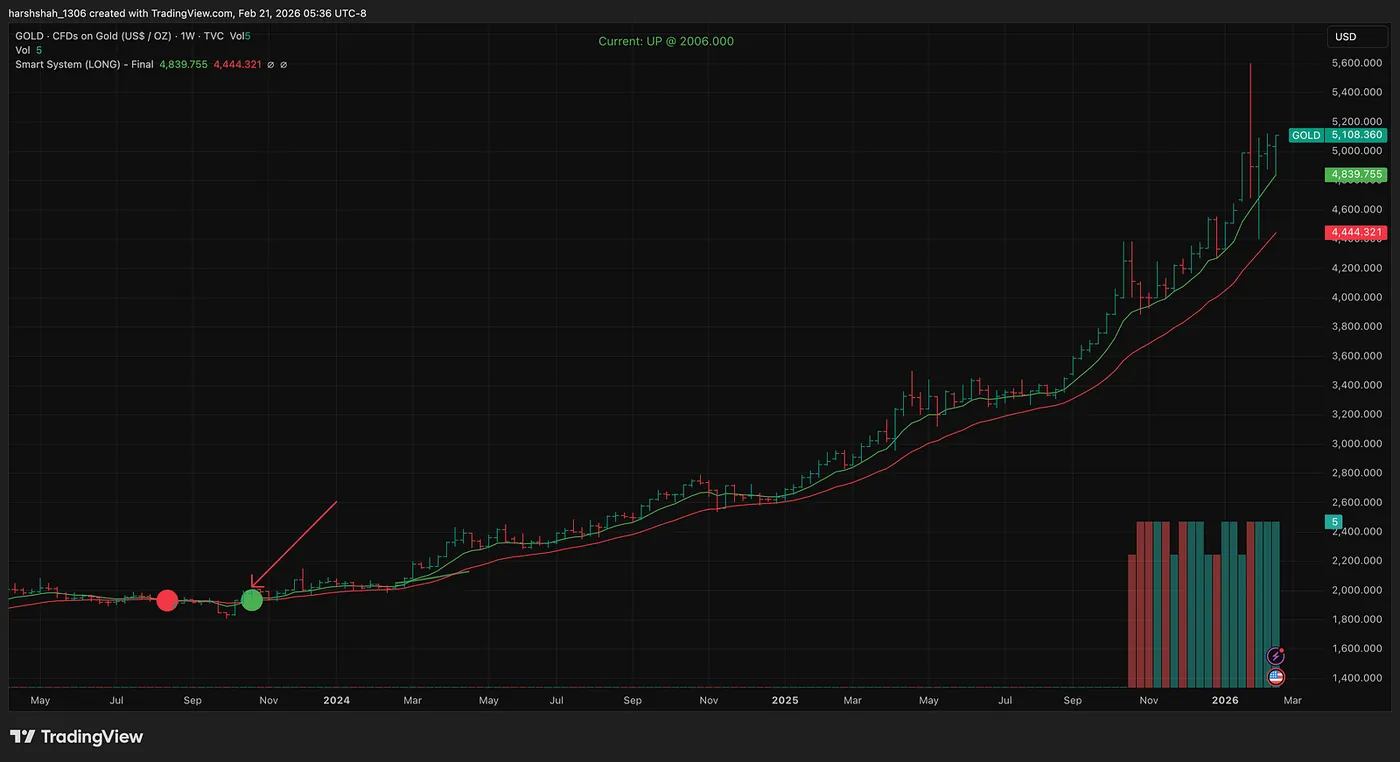
GOLD —190% Gain Since Momentum Flip (Still Strong)
8 EMA crossed above 21 EMA near $1,928
Price today: ~$5,000
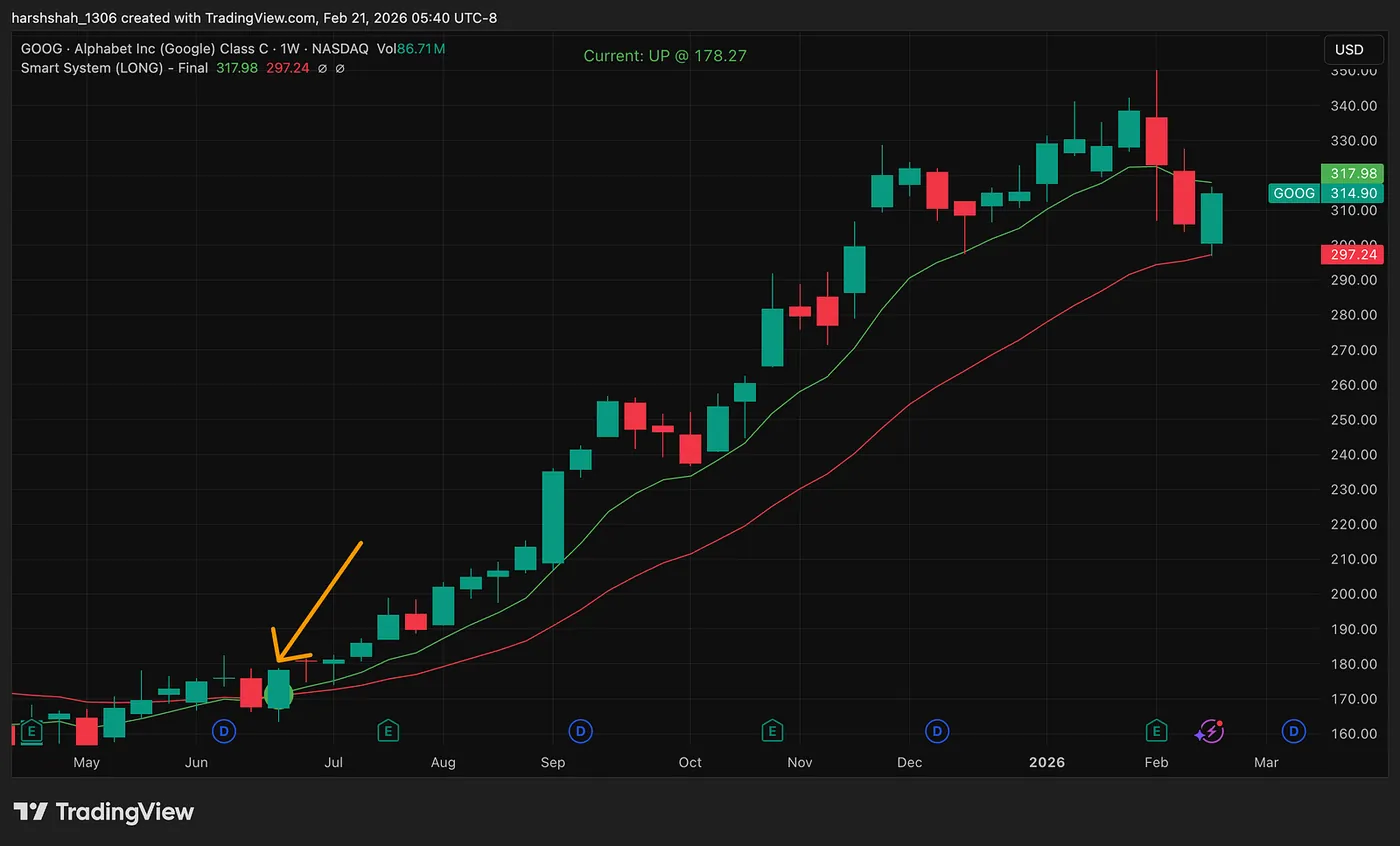
Google: 75% Gain (Still Strong)
8 EMA crossed above 21 EMA near $170
Price today: ~$305
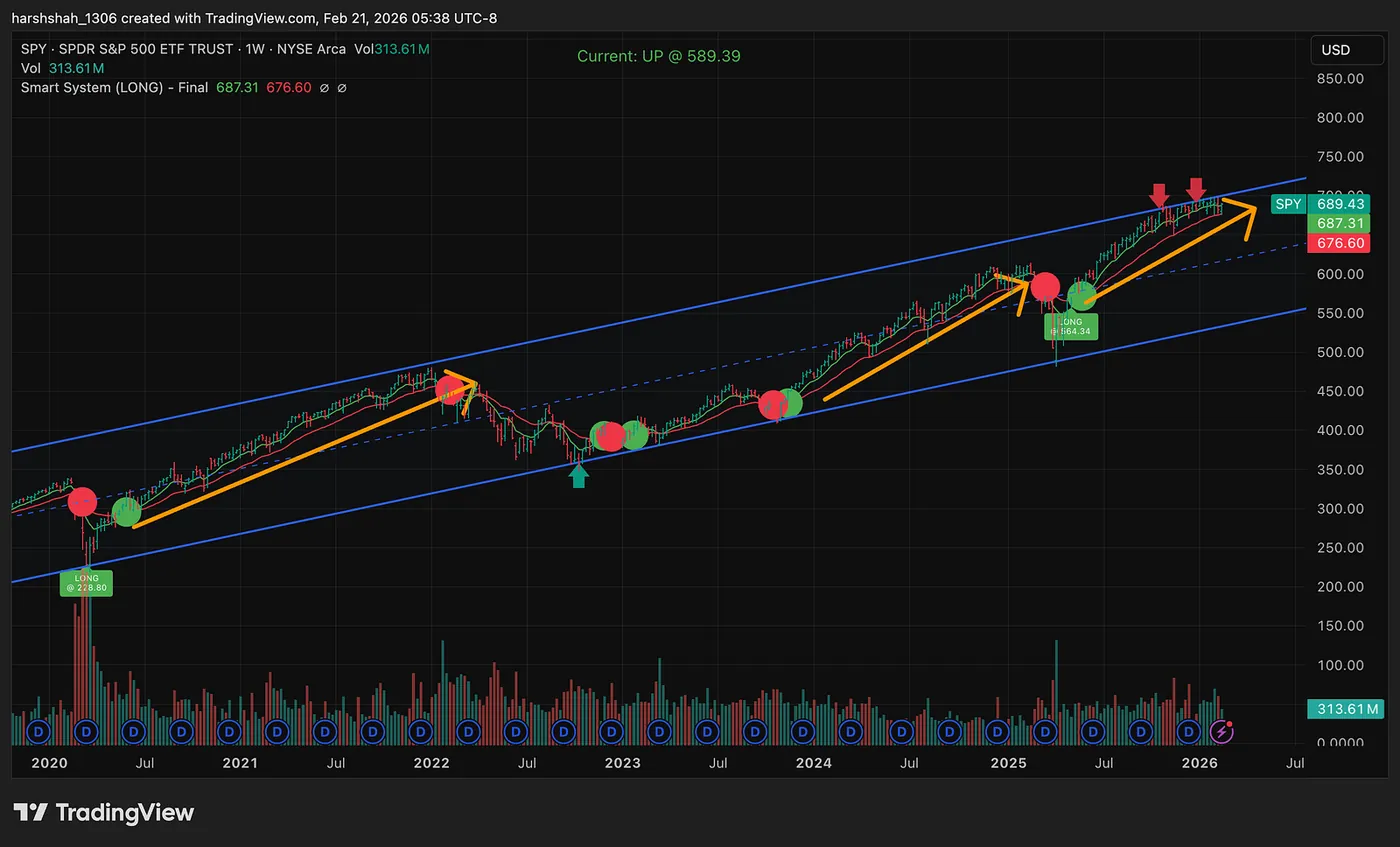
SPY — A Classic Case Study
Case 1: 57% gain
Case 2: 35% gain
Case 3: 20% gain
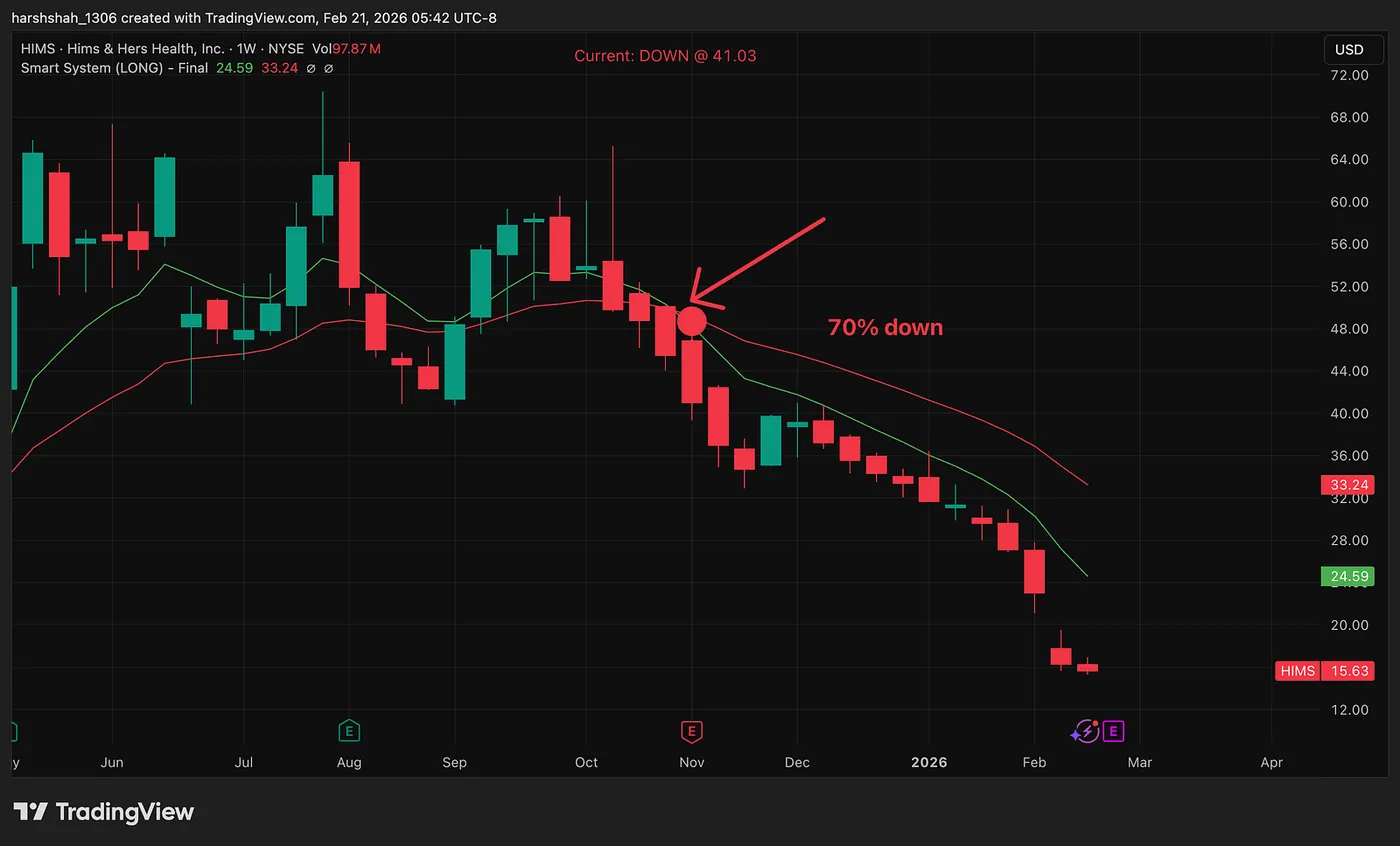
HIMS: Momentum down since 41$, now 15$ (70% crash)
8 EMA crossed below 21 EMA near $41
Price today: 15$
I can go on and on with examples, but I think you get the idea.
The Real Power — Filtering Trades
The 8/21 EMA is not a trading strategy.
It’s a filter.
And filters improve probabilities.
My process is simple:
- Identify the setup (structure, levels, pattern)
- Check momentum using 8/21 EMA
- Participate only if momentum supports the idea
- Avoid trades when momentum is weak
This dramatically improves trade quality.
You Don’t Need Complexity
Many traders believe more indicators equal better results.
In reality, simplicity wins.
Two lines can tell you:
- Trend health
- Momentum strength
- Market conditions
- Risk environment
That’s powerful.
Final Thoughts
Trading becomes much easier when you stop fighting momentum.
You don’t need to catch bottoms.
You don’t need to predict tops.
You don’t need to trade every move.
You just need to align with strength.
For me, the 8 EMA and 21 EMA relationship has been one of the simplest ways to:
- Stay in strong trends longer
- Avoid weak conditions
- Reduce emotional decisions
- Improve consistency
Sometimes the biggest breakthroughs don’t come from complicated strategies.
They come from simple realizations.
This was one of those moments for me.
And yes — it really did blow my mind.