How I Lost $27,193 in One Day and The 5 Psychology Traps That Cost Traders
By Harsh Shah · Updated
Disclaimer:This information is for educational purposes only and should not be considered financial advice.
I lost $27,193 in one trading day.
It felt devastating — but it turned into one of the most important lessons of my trading/investing journey.
I uncovered the problem, fixed it, and moved forward stronger.
You don’t need to repeat the same costly error — learn from my experience instead.
Remember: mistakes don’t define you. Not learning from them does.
Let’s keep it simple: a $100,000 account, stock trading at $100.
My Ideal Plan
Like every trader, I went in with a plan.
First rule: never risk more than 5% on a single trade. For me, that meant $5,000 max exposure — or 50 shares.
Second rule: always protect the downside. My stop loss was set at $90.
Starting with just 50 shares, my worst-case loss was only $500. That’s $10 per share, times 50. Manageable.
The goal? Start small, average down as the stock pulled back, stacking shares at better prices.
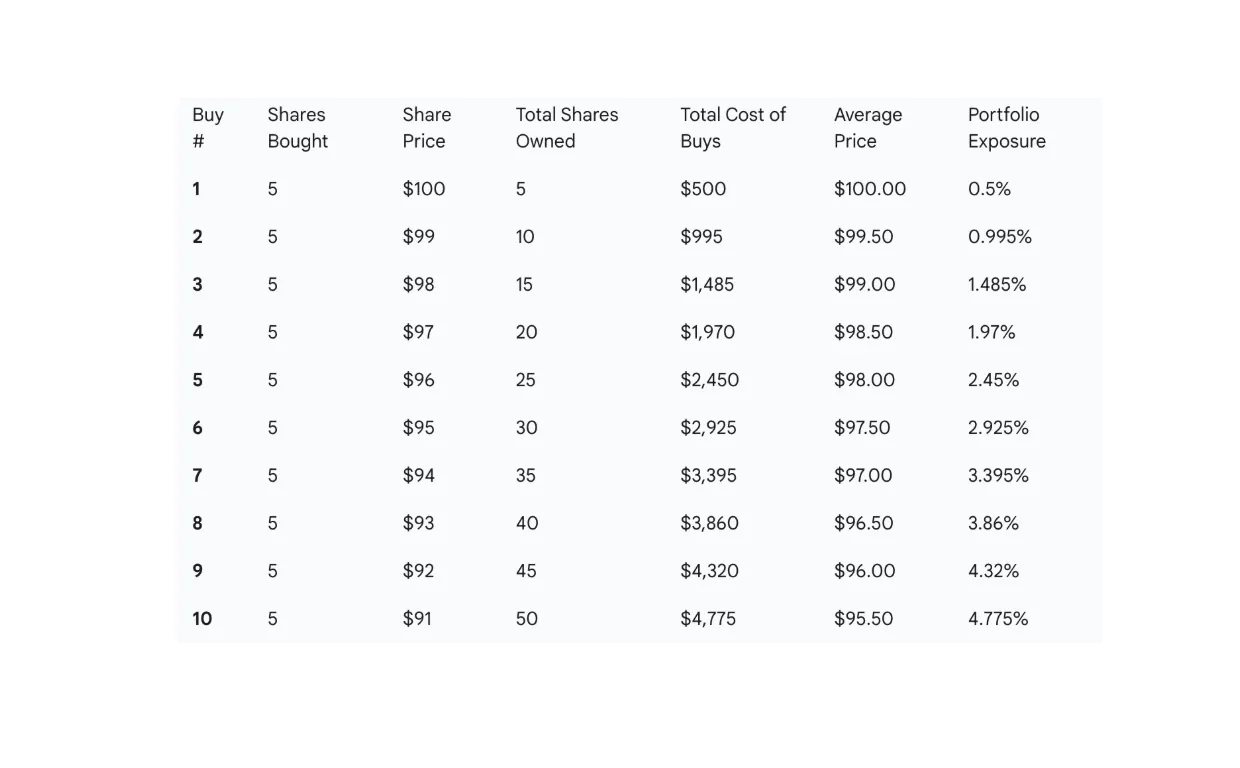
Per my strategy, my actual total loss would have been much smaller.
Average price: $95.50
Stock price: $90
Shares: 50
Loss: $5.50 × 50 = $275
A hit that small? Totally manageable — I could’ve shrugged it off and moved on.
What really happened that day ?
But that day was different.
I convinced myself I could make some quick money scalping — the setup looked perfect, odds in my favor.
Instead of starting small, like my rules said, I went all-in right away. A full $5,000 position. My thought: this is the best entry, why wait?
But as the price started dropping, reality hit hard. Every $1 move against me meant a $500 loss.
I tried to “average out” as it kept falling… but the result? A disaster.
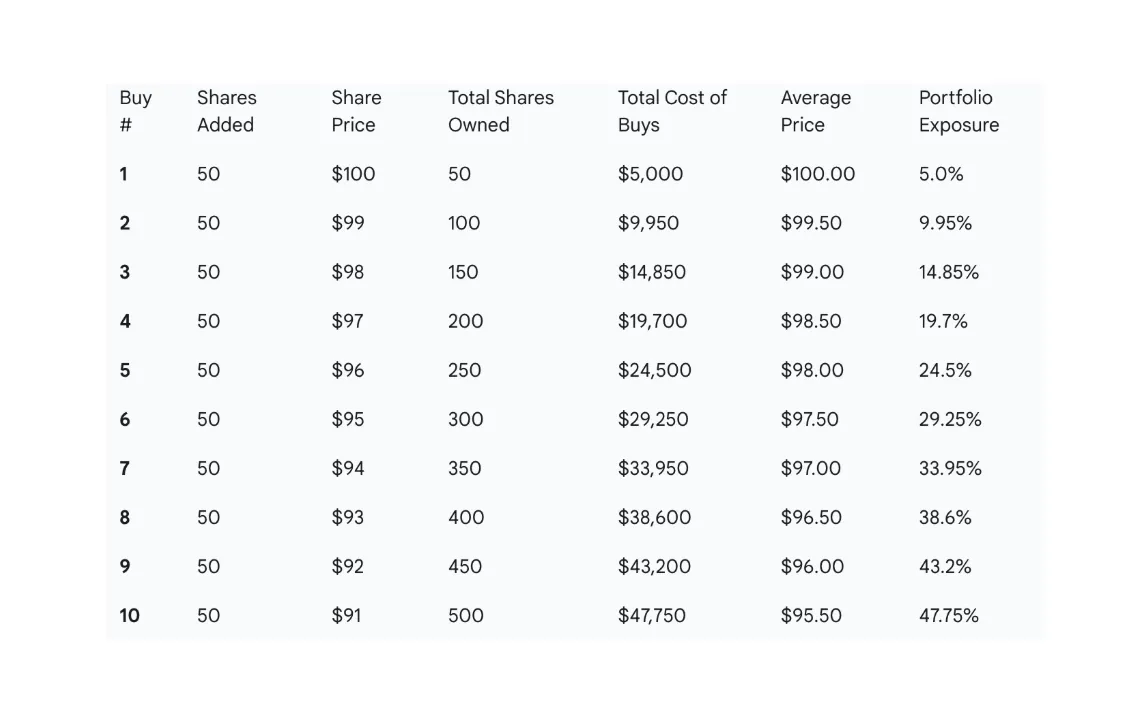
Here’s how it played out:
Average price: $95.50
Stock price: $90
Shares: 500
Loss: $5.50 × 500 = $2,750
This wasn’t the small, controlled $275 hit I had planned for.
This was ten times bigger.
I was crushed — the biggest realized loss I had ever taken in a single day.
The strategy wasn’t the problem — my broken discipline was.
My 3 key mistakes
- Chasing quick profits turned me into a gambler.
- I started with a position larger than I was comfortable with.
- Instead of taking the small $500 loss, I kept averaging down — and ended up losing far more than I had planned.
Our brains aren’t built for trading, and that’s why most traders lose money!
Here are the top 5 psychological traps that cost traders
Loss Aversion: Holding Losers, Cutting Winners
We feel the pain of a loss twice as strongly as the joy of a gain.
This makes us hold onto losing trades too long (hoping they’ll recover) and sell winners too quickly (fearing gains will disappear).
SolutionSet stop-loss and take-profit levels before entering the trade.
Automate exits when possible.
Use position sizing small enough that losses don’t sting.
Maintain a trading journal to help you spot when loss aversion creeps in.
The Certainty Bias: Chasing Guarantees
Our brains hate uncertainty, but markets are unpredictable by nature. This makes us overtrade, chase “perfect setups,” or blindly follow so-called gurus.
SolutionAccept uncertainty as part of the game.
Think in probabilities, not certainties.
Focus on consistent execution of your strategy, not on finding a “sure thing.”
The Ego Trap: Why Being Smart Can Hurt
Being “right” feels good — but markets don’t reward intelligence, they reward discipline.
Overconfidence leads traders to think they can outsmart randomness, often ignoring risk management.
Solution
Trade with humility.
Always define your position size and stop-loss in advance.
Let the plan guide your actions, not your ego.
The Dopamine Trap: Wins Make Us Reckless
Every winning trade releases dopamine — the brain’s feel-good chemical. But chasing that high often leads to over-leveraging and bigger risks, until one bad trade wipes out the gains.
Solution
Stick to a consistent risk per trade, no matter how good you feel.
Celebrate discipline, not just profits.
Scale up gradually and avoid chasing the emotional high of “just one more trade.”
Emotions Rule: Panic and Greed
Fear, greed, and FOMO (Fear of Missing Out) hijack rational thinking. Fear makes us panic sell, greed pushes us to overextend, and FOMO lures us into late trades.
Solution: Plan trades outside of market hours to reduce emotional influence. Review your plan before execution, and remind yourself that missing one opportunity is better than blowing up your account.
The Steps I Took to Stay Disciplined
- Separate accounts for trading and long-term investing — only trade with money I’m prepared to lose.
- Always have a plan: define position size and stop-loss before entry.
- Trade size that fits you: if a trade makes you panic or check prices every minute, it’s too big.
- UseTechnical Analysis to tilt odds in your favor, backed by data.
(Learn more about technical analysis here) - Start small and scale gradually until reaching your max allocation.
- Think in probabilities — never risk everything on one idea.
- Plan trades after hours to avoid being pulled by live price action.
- Keep a trading journal: log entries, exits, and reasons. Review weekly to catch patterns and improve.
Following the above hasn’t been easy — it took me months to uncover the right approach, set it up, and stick to it consistently.
At the end of the day, trading isn’t about being perfect. It’s about managing probabilities and emotions with structure and discipline.
Final Thoughts
No matter how much you learn about the markets, the real key is understanding yourself. Without the discipline and mindset to manage positions, the markets might not be the right place for you.
In the end, the goal is to be the casino, not the gambler.