Snapchat 10×’d Its Revenue… but the Stock Is Still Down 65% — Here’s Why
By Harsh Shah · Updated
Disclaimer: This information is for educational purposes only and should not be considered financial advice.
Over the long term, the stock price follows the business behind it — nothing more, nothing less.
This idea, repeated by legendary investors for decades, simply means:
👉 If profits rise, share prices rise.
👉 If profits stagnate or fall, share prices follow.
Revenue may attract eyeballs, but profits are what ultimately drive long-term market value.
To understand this better, let’s revisit the fundamentals.
How Business Profitability Drives Share Price
Below are two simple cases that show why profits — not revenue — dictate where a stock goes over time.
Lets set a base case:
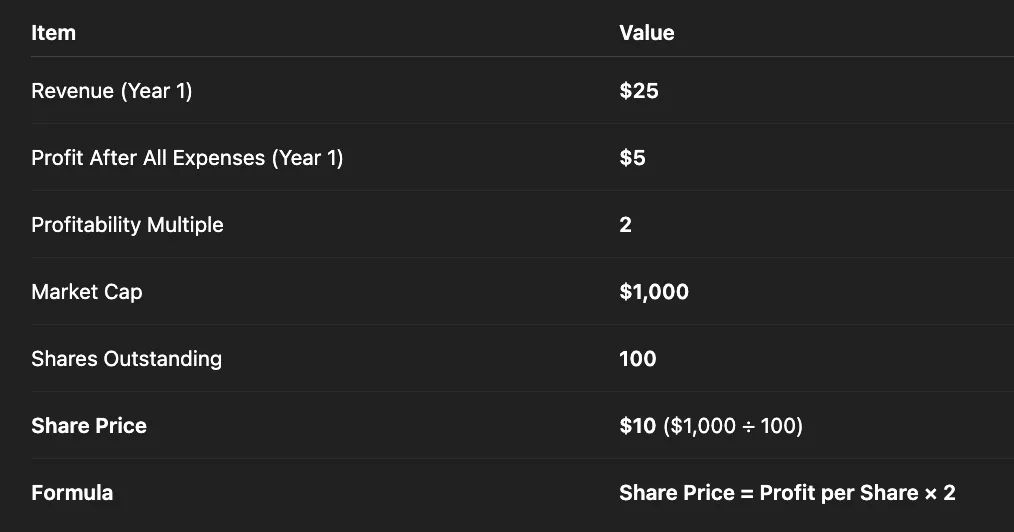
Case 1: Revenue Up + Profit Up = Stock Up
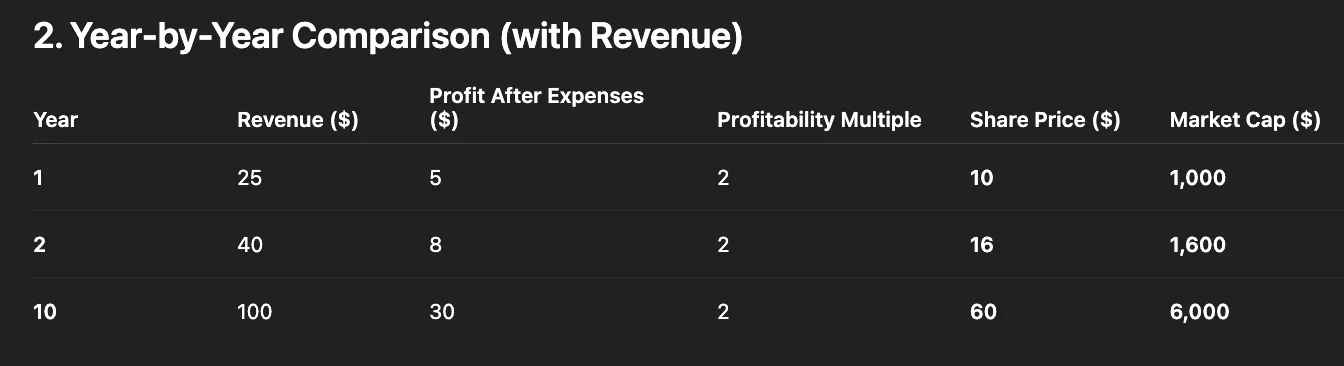
- In Year 1, the business earns $5 profit on $25 revenue → share price is $10.
- In Year 2, revenue and profit grow → profit becomes $8 → share price jumps to $16.
- By Year 10, as the business scales, profit reaches $30 → share price climbs to $60.
✨ This is how wealth is created in the market.
Case 2: Revenue Up + Profit Down = Stock Down
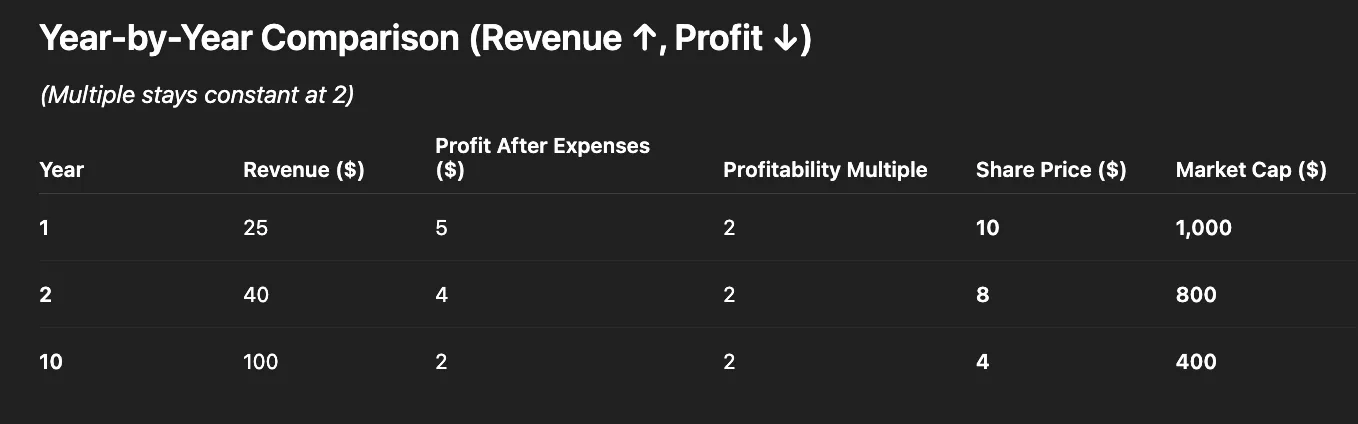
Even though the business sells more every year:
- Revenue grows $25 → $40 → $100
- Profit falls $5 → $4 → $2
This causes:
- Share price to drop $10 → $8 → $4
- Market cap to shrink $1,000 → $800 → $400
Because markets price the business on profit, not revenue.
What These Examples Show
By keeping the valuation multiple constant, it becomes clear:
- Higher profits → higher share price
- Lower profits → lower value
When companies reinvest, improve efficiency, or scale profitably, that growth shows up in the stock price. That’s why, over decades, share prices eventually mirror the business’s true profitability.
So… What Went Wrong With Snapchat?
Revenue: The Topline Story
Revenue is the total money a business earns from selling its products or services before any expenses are deducted.
Between 2016 and 2025, Snapchat’s revenue exploded:
$404M → $5.4B (more than 10× growth)
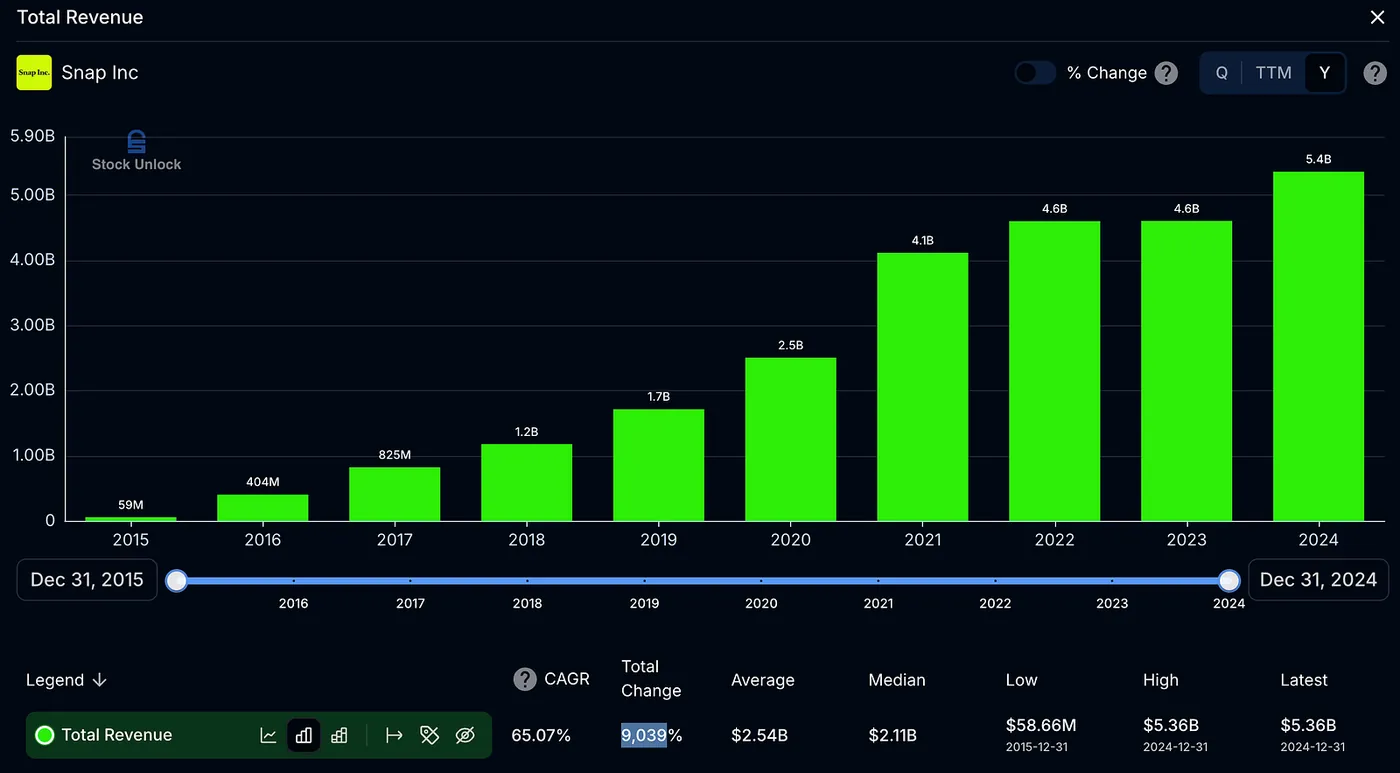
On the surface, this looks incredible. Anyone glancing at just the topline would think: “Wow, this business is killing it!”
Share Price: The Reality Check
But the share price during the same period has dropped -65%
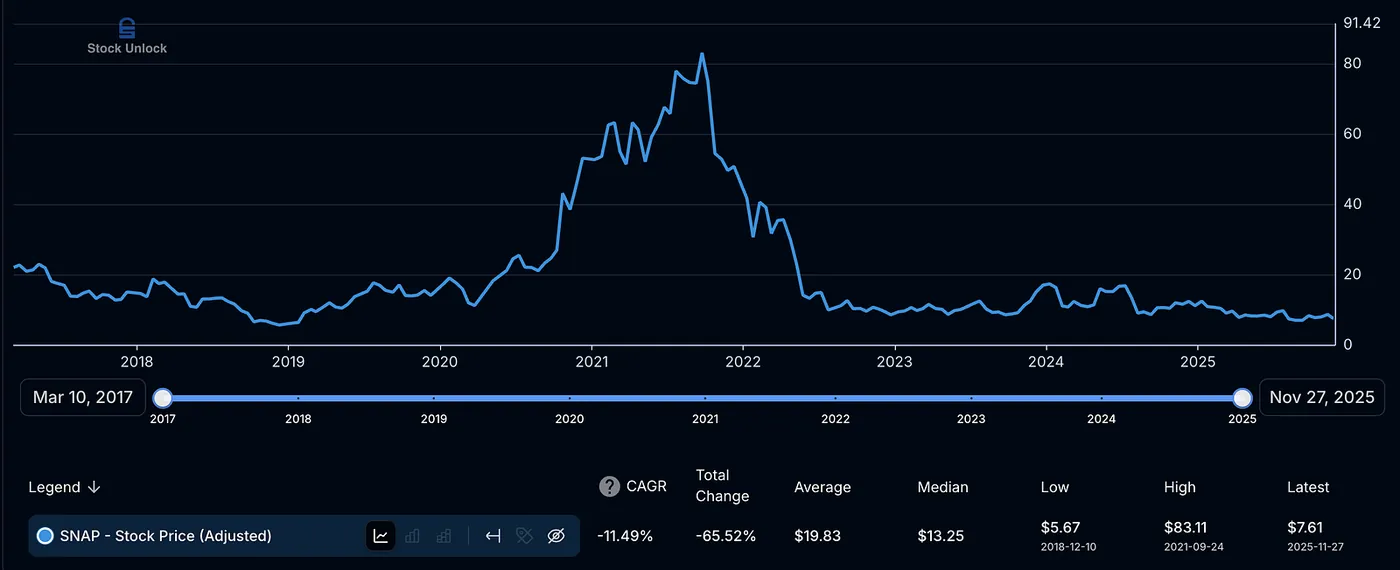
Looks confusing, right ? Now, lets look how the profitability of the business was during this period.
Cash From Operating Activities: The Core Engine
Cash From Operating Activities is the real cash generated from a company’s core business operations, after adjusting for expenses, non-cash items (like SBC), and working-capital changes.
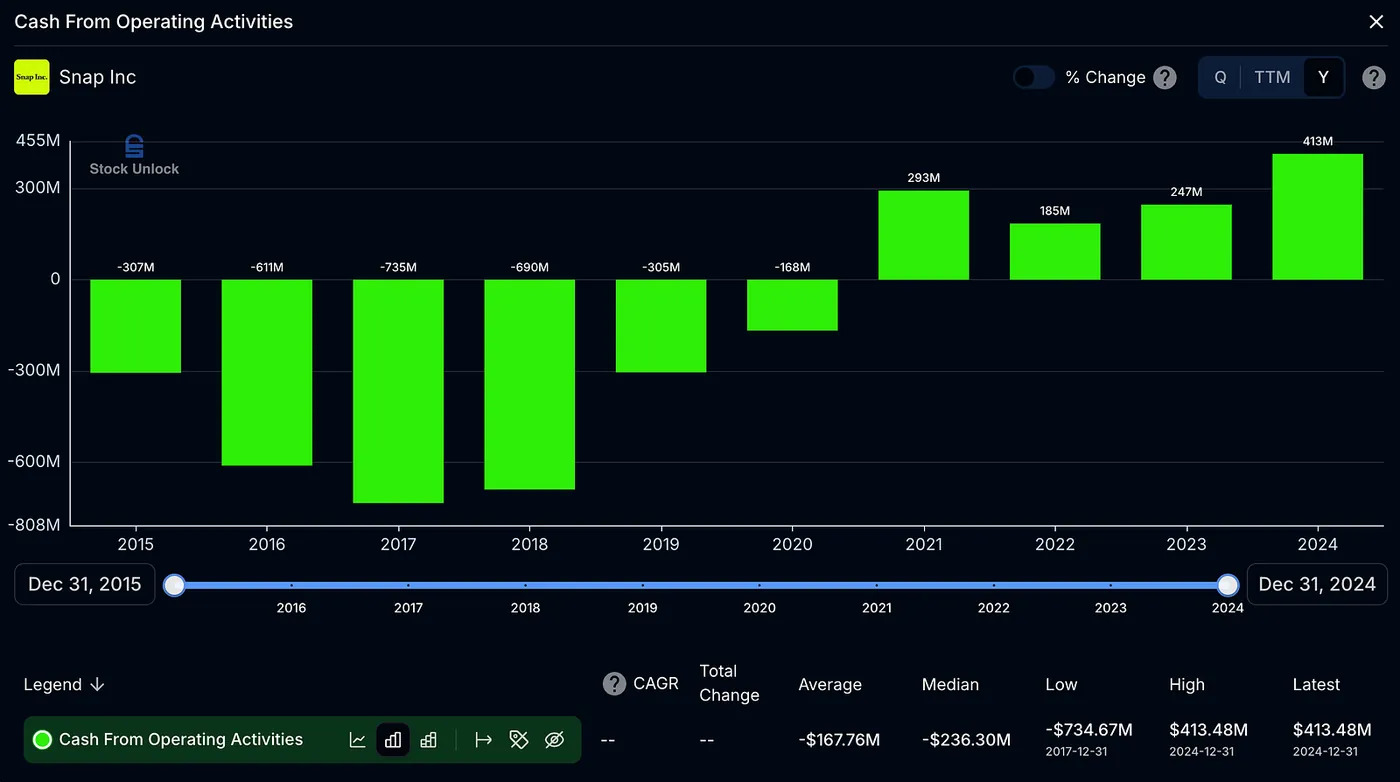
Snap’s operating cash flow only recently turned positive.
Example: In 2024, Snap generated $413M from operations.
Stock-Based Compensation: The Hidden Drain
Stock-based compensation (SBC) is when a company pays employees using shares instead of cash. This increases the total number of shares, dilutes existing shareholders, and acts as a real expense — just paid through dilution rather than cash.
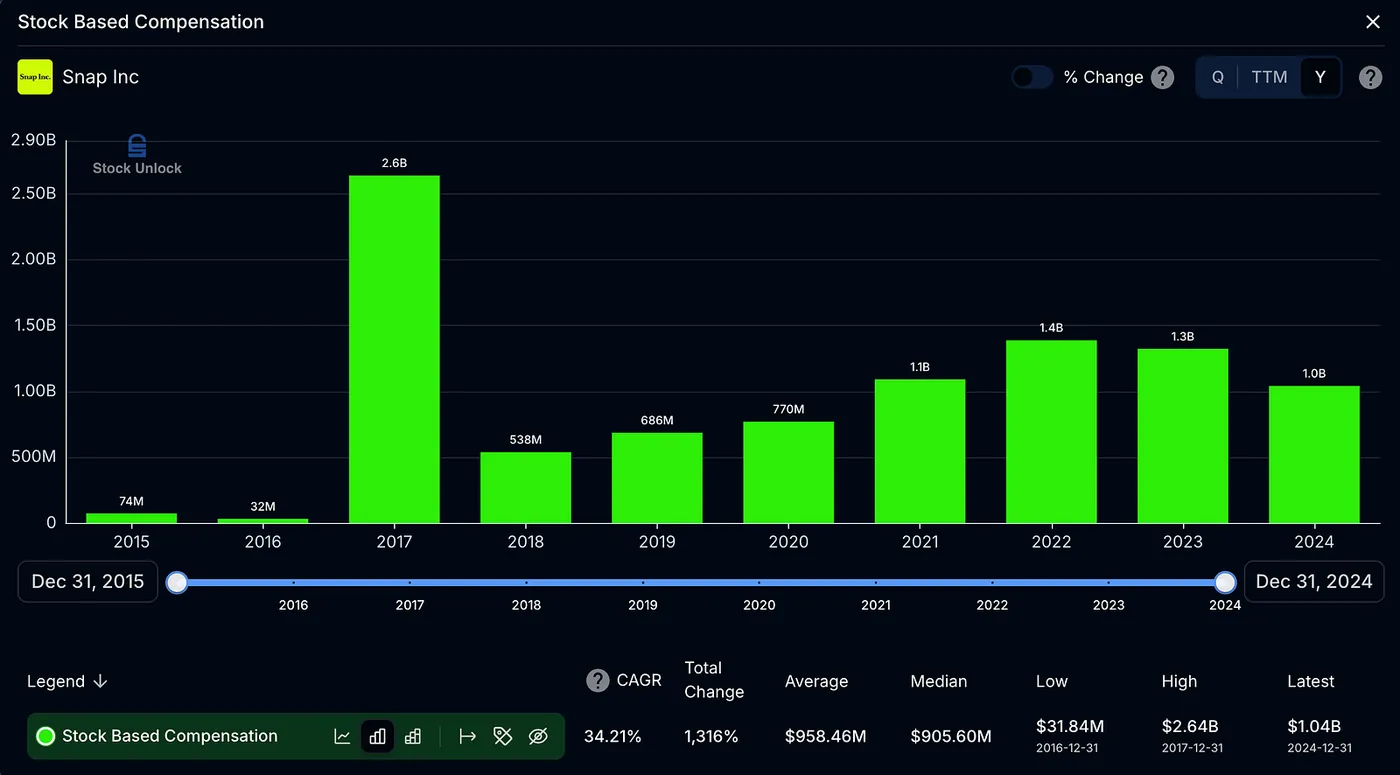
In the same year 2024, Snap paid $1B in SBC to insiders — a real, recurring expense. After accounting for SBC:
👉 Snap remains unprofitable — losing ~ $600M per year.
Result?
A falling stock price despite booming revenue.
(And this analysis doesn’t even touch other factors — this is just the surface.)
How Do Great Companies Compare?
Let’s look at businesses like Google or Amazon — companies that scaled revenue and became increasingly profitable over time.
That’s why their share prices compounded massively.
Not just because revenue grew…
But because profits and free cash flow exploded.
Google — Deep dive
Revenue
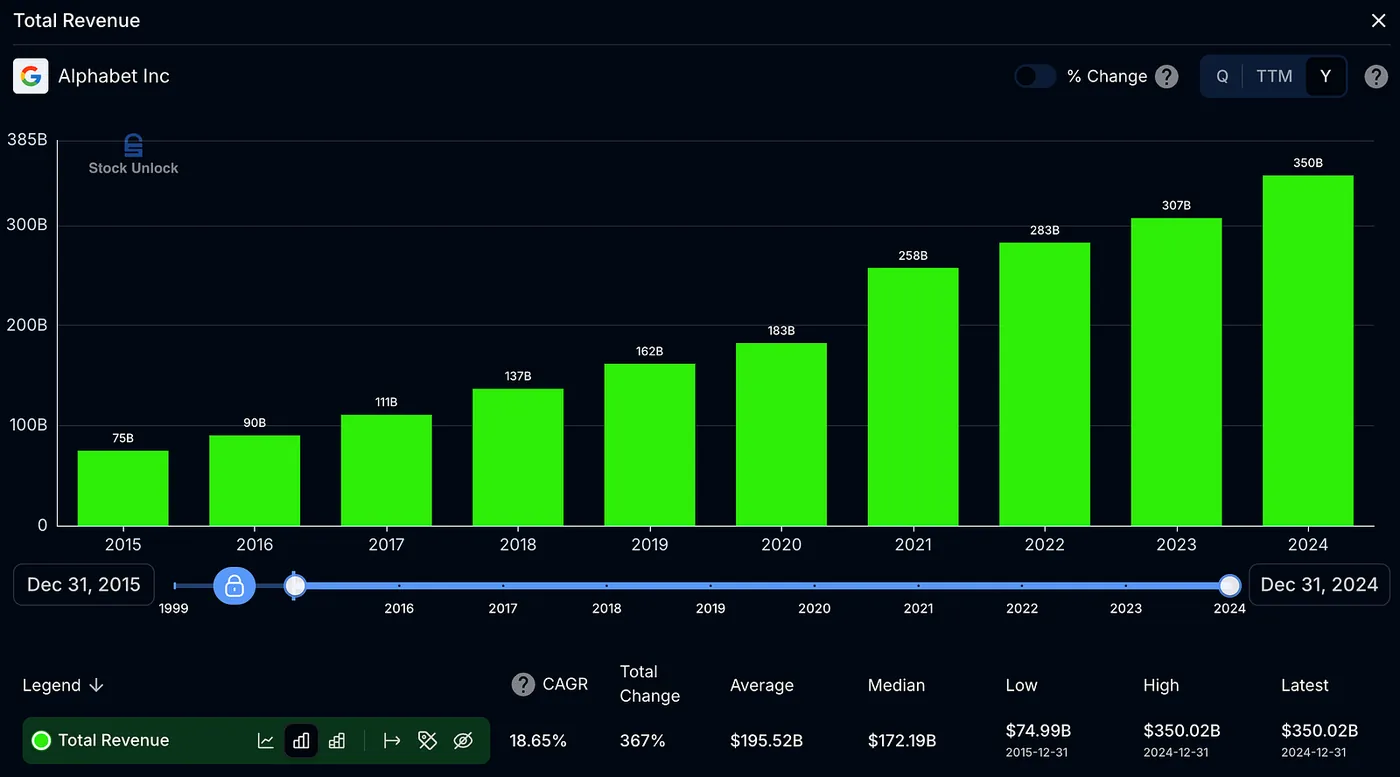
2016 and 2025, Google’s revenue exploded:
$90B → $350B (4x growth) — Way less than Snapchat.
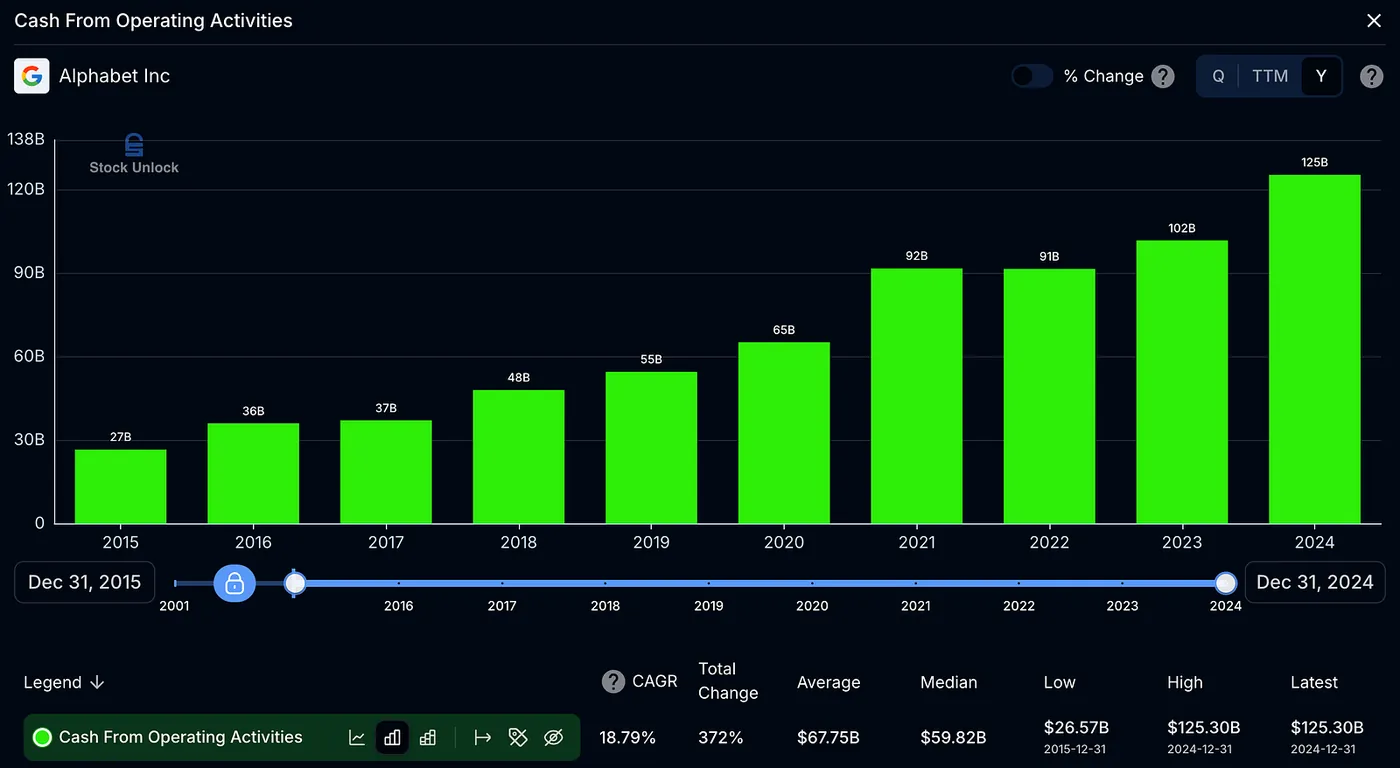
Cash From Operating Activity
Google’s operating cash flow has been been positive and growing.
Example: In 2024, Google generated $125B from operations.
Stock Based Compensation
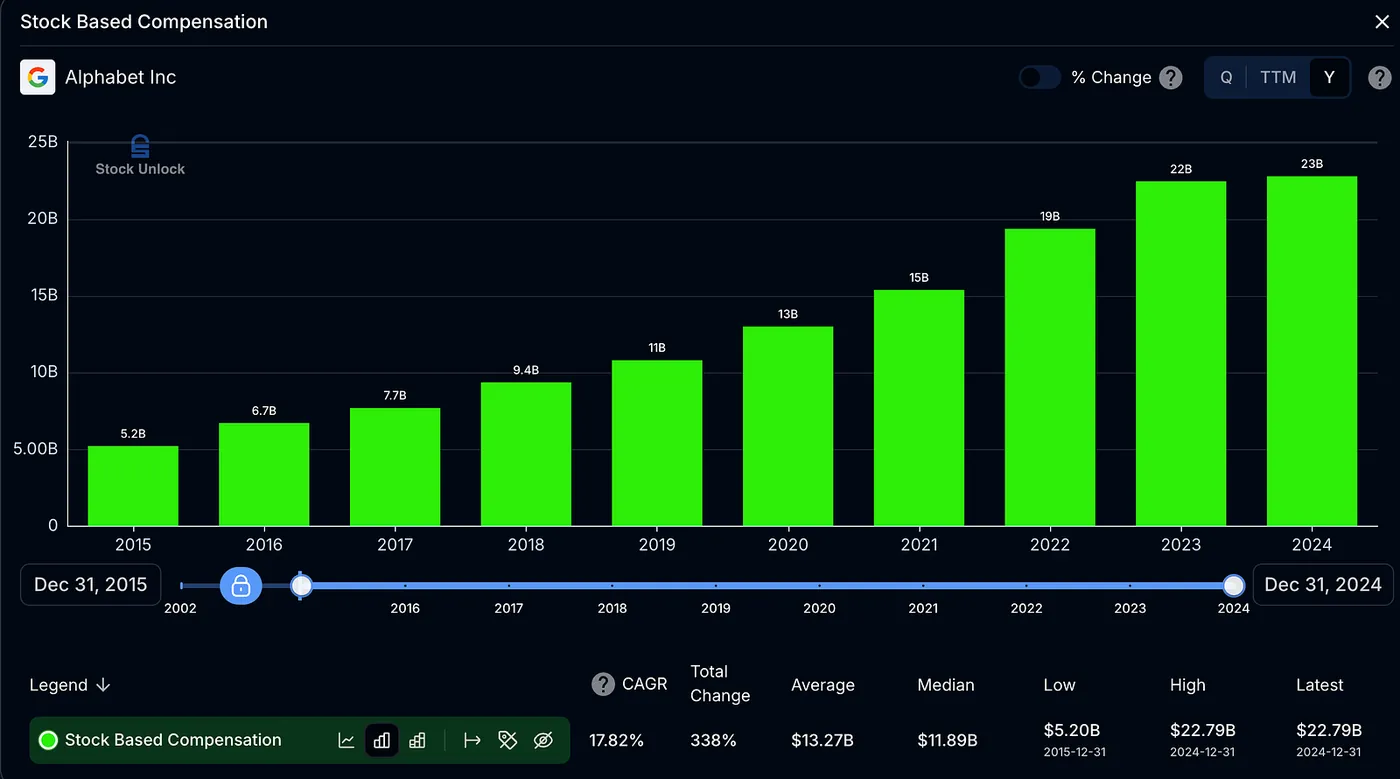
In 2024, Google produced an enormous $125B in cash from its core operations, while stock-based compensation totaled $23B.
In other words, Google can comfortably pay its employees using the cash its business generates — and still have a massive surplus left over for reinvestment, buybacks, dividends, innovation, and future growth.
This is why the Google’s stock price has produced a 400% return over the past 10 years.
Final Thoughts
Snapchat is a perfect reminder:
- Revenue alone doesn’t make a great business.
- Heavy stock-based compensation hurts real profitability.
- Dilution erodes shareholder value.
- Without growing profits, even amazing revenue growth won’t lift the stock.
So next time you invest, remember:
Technical analysis helps you time entries — but fundamentals tell you whether the stock can go anywhere in the first place.
Revenue tells you the story. Profit tells you the truth. Always check both.