I Broke My Own Rules — And Paid a 14% Price in One Trade. Here Are the Lessons That Could Save You.
By Harsh Shah · Updated
Disclaimer: This information is for educational purposes only and should not be considered financial advice.
We always hear traders bragging about their big wins.
This isn’t one of those posts.
This is the story of a trade where I lost money — 14% in one shot — and walked away with lessons that will save me thousands over the long run.
Because as long as you learn, you evolve.
And every time you evolve, you become a better trader than the version you were yesterday.
How It All Started
The setup was clean.
The pattern was reliable.
But the trader — me — messed up.
Looking back, the loss didn’t come from the chart, or the pattern, or the strategy.
It came from discipline slipping and excitement taking over.
And once emotions drive the bus, the crash is inevitable.
Here’s exactly what happened so you can avoid the same trap.
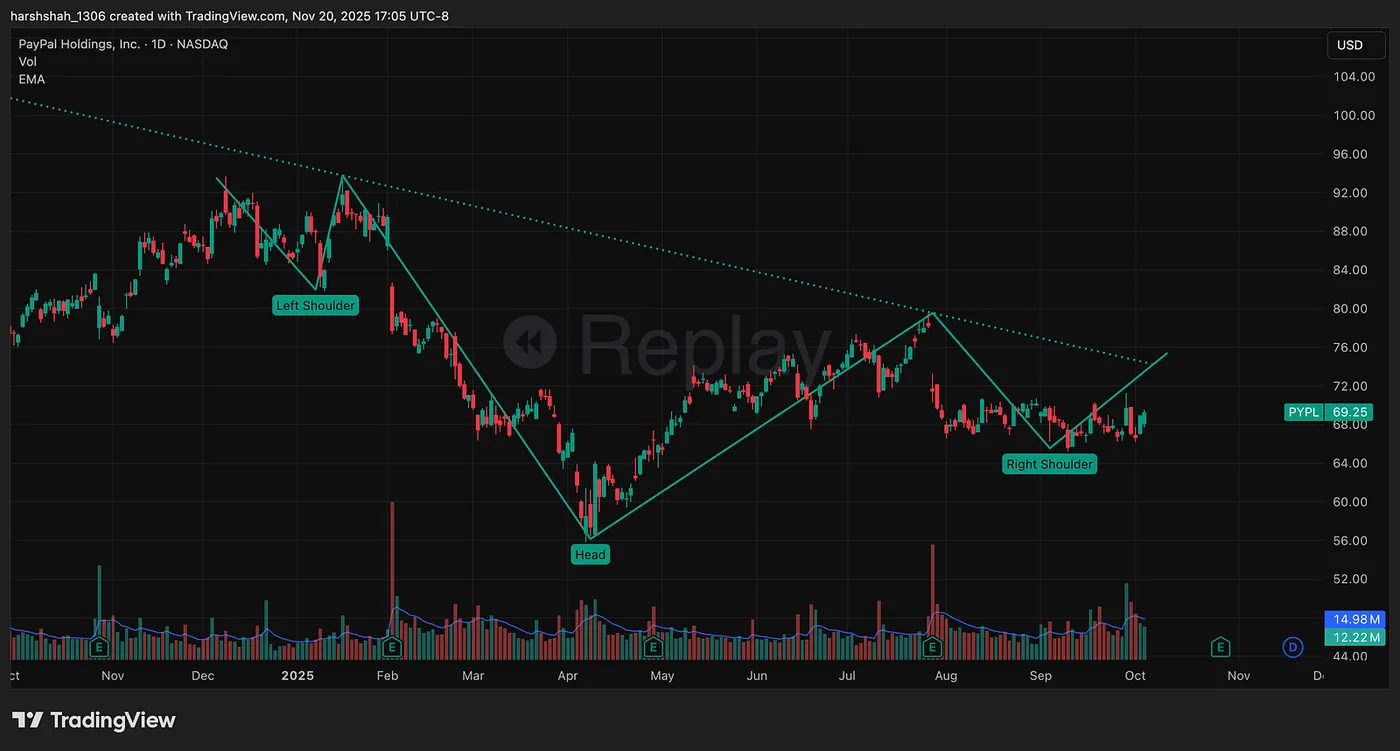
PYPL: October 6th — Added to my Watchlist
PYPL was forming Inverse Head & Shoulders — historically a solid 60–80% success rate depending on context.
I added PYPL to my watchlist.
The pattern was forming nicely.
My plan: enter only on a clean breakout + confirmation.
PYPL: Oct 25th — Failed Breakout Attempt
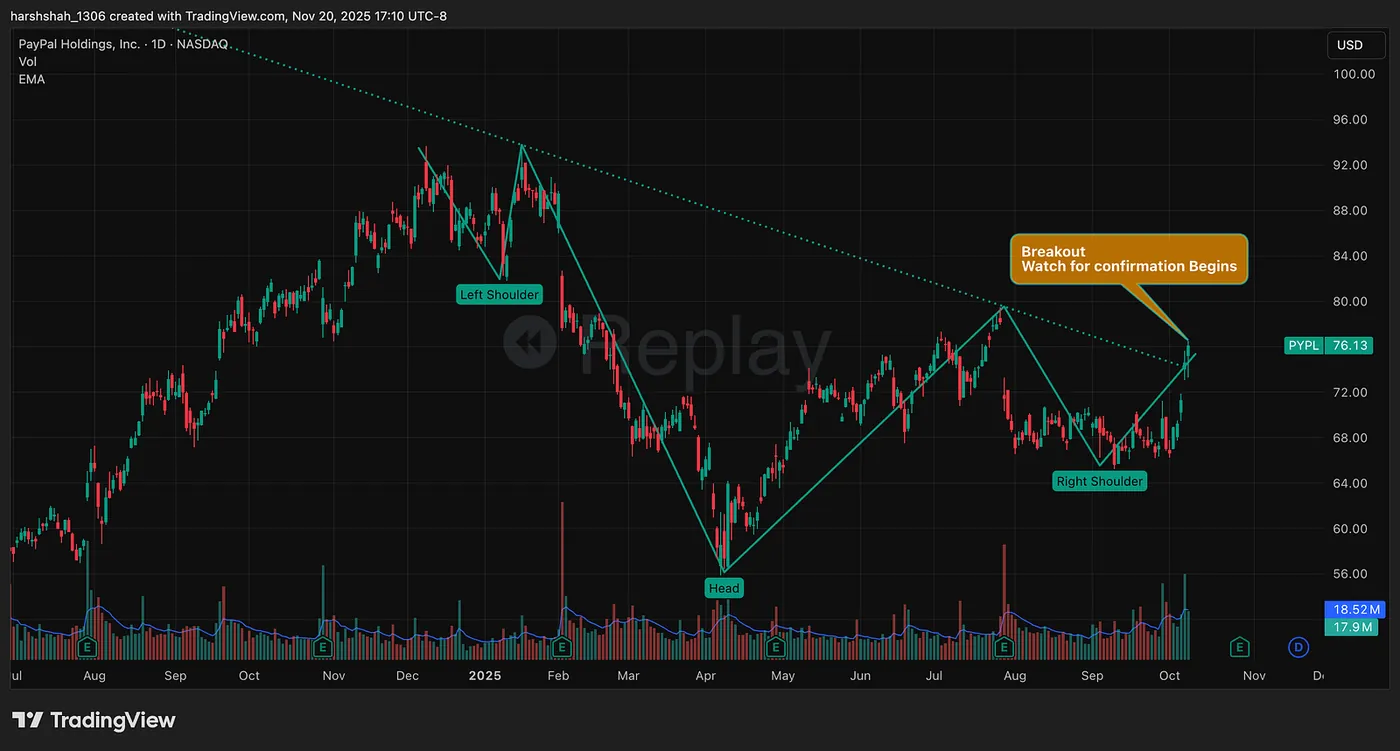
It didn’t confirm.
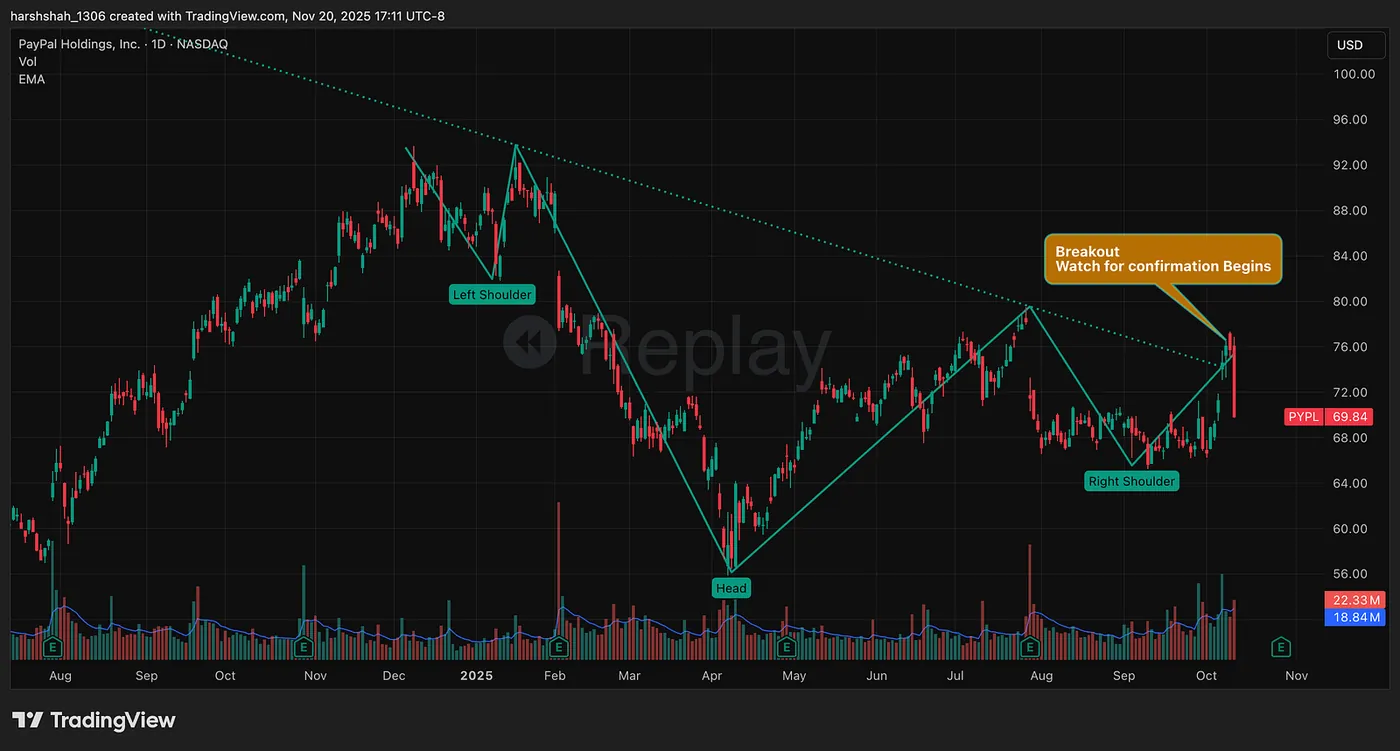
I stayed disciplined and avoided the FOMO entry.
Good decision.
The watch continued.
October 28: The Emotional Trade
Then came the candle that tested everything.
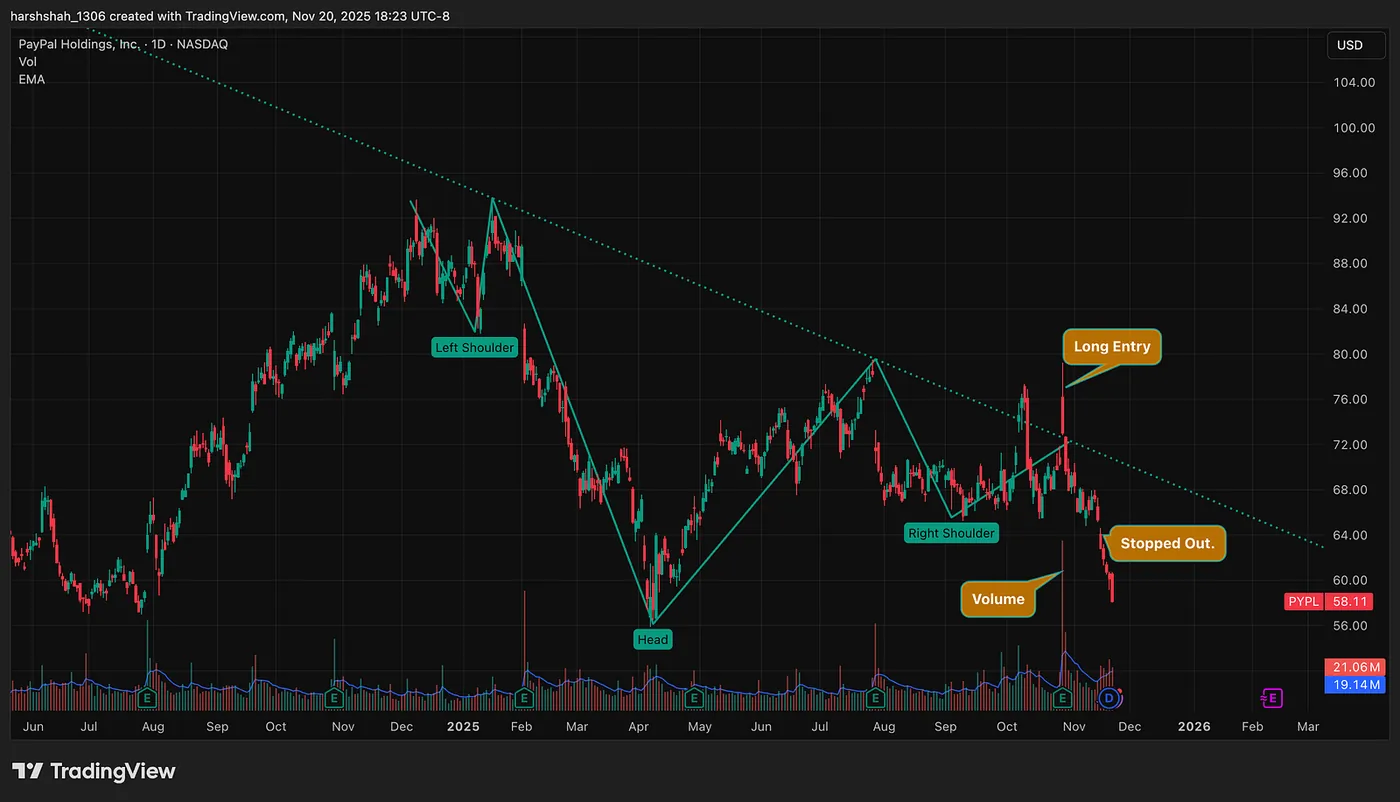
PYPL pushed again with strong volume.
It looked like the breakout I’d been waiting for.
And that’s where I broke my own rules. I entered long at 76.4$ and was stopped out right below the stop loss zone — right shoulder.
My Mistakes:
1. I didn’t wait for confirmation.
2. I didn’t even wait for the breakout candle to close.
3. I FOMO’d right in around $76.
The market punished me instantly.
The stock reversed and closed near $70 — an 8% drop in a single day.
Another mistake..
4. I didn’t cut the trade when the setup invalidated.
I lied to myself saying:
“Stop-loss is below the right shoulder. I’ll let it play out.”
But there was no setup left to “play out.”
It had already failed.
I just didn’t want to accept it.
Eventually, the stop got hit — and I took the full loss.
Key Lessons From This Painful Trade
These 3 might save you more money than any indicator ever will:
✔ No FOMO. Ever.
If you have to rush into a trade… it’s not your trade.
✔ Wait for candle close.
A breakout intra-day means nothing.
A breakout after close means everything.
✔ If the setup fails, exit.
Your stop-loss is not a permission slip to hope.
Losses become failures only when we refuse to learn.
My PayPal trade didn’t go as planned, but the lesson paid off instantly: it stopped me from making a FOMO entry on Rivian.
Applying the Lesson: The Rivian Trade
Here’s the part I’m actually proud of.
Shortly after PYPL, a similar setup appeared on RIVIAN.
Everything looked tempting.
Volume. Breakout attempt. Momentum.
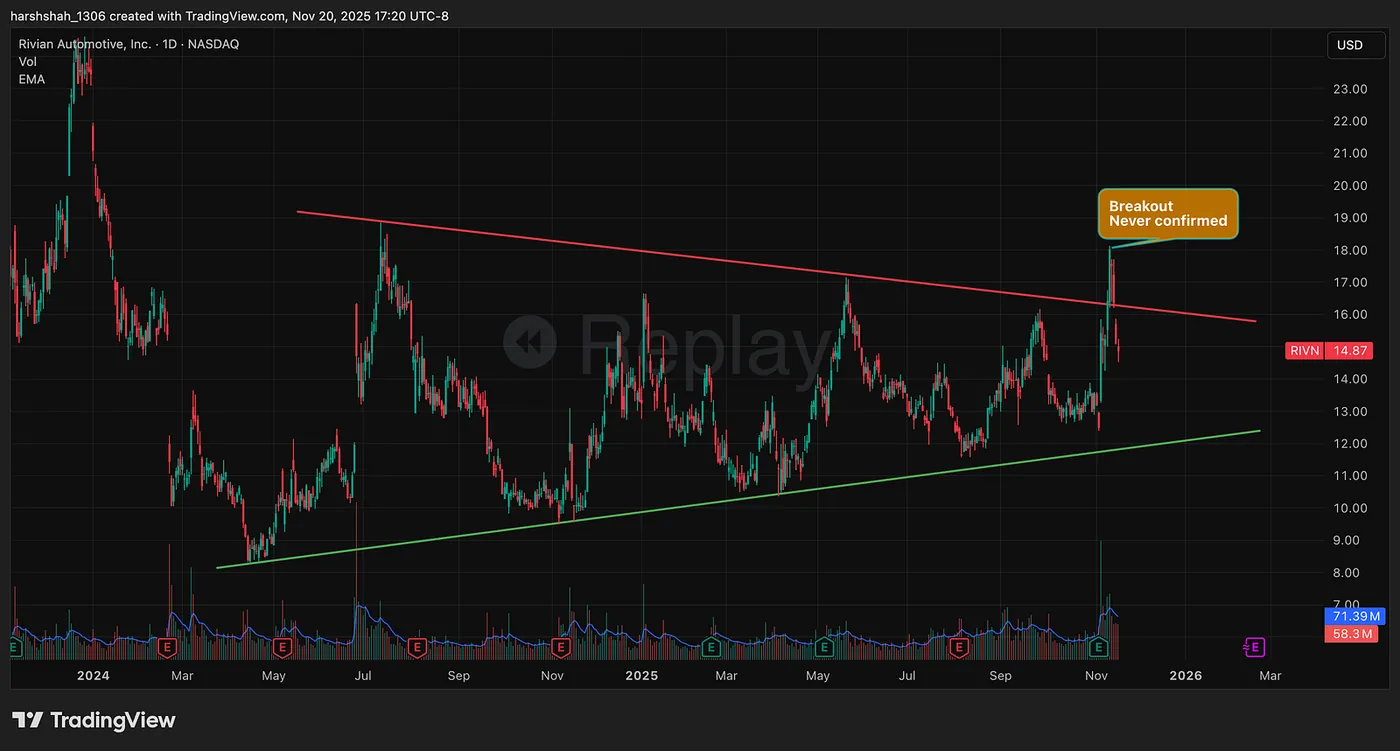
Old me would’ve jumped right in.
But this time…
I waited for confirmation.
I waited for candle close.
And I avoided a losing trade entirely.
Sometimes the best trade is the one you don’t take.
Final Thoughts
I messed up.
Big.
But I adapted — and immediately saw the results in the very next opportunity.
Trading isn’t about perfection.
It’s about learning, journaling, adjusting, and not repeating the same errors.
Your losses don’t define you.
Your response to them does.
And if my 14% hit helps you avoid yours, then this loss was worth every dollar.