How I Earned 10% in 5 Days — And How You Can Too
By Harsh Shah · Updated
Disclaimer: This information is for educational purposes only and should not be considered financial advice.
When I first started learning technical analysis, I picked up the basics — support and resistance, identifying breakouts vs fake outs. But even with this knowledge, I struggled.
The hardest part? Timing my entries and understanding risk-to-reward. I was constantly asking myself:
“What’s a good price to pay?”
"Do I jump in right after the breakout?"
"What if the price reverses and I lose all my money?"
I would often jump into trades without a plan, and the outcome was predictable — I was losing more than I was winning. Every loss chipped away at my confidence, and honestly, there were times I felt completely demotivated.
I later discovered a powerful concept that completely transformed how I approach trading and investing today.
If you’ve ever felt the same frustration, I want you to know: you’re not alone. Because here’s the truth: If I can do it, anyone can.
Retrace to the Scene of the Crime.
In trading, price rarely moves in a straight line.
Even after a breakout, the market often pulls back to test the very level it just broke. Traders call this a “Retrace to the Scene of the Crime.”
It’s a simple yet powerful setup.
1. Spot the breakout and get confirmation.
2. Wait for the market to retest the breakout level.
3. Enter in the direction of the breakout.
By being patient for this retrace, set yourself up with a much stronger risk-to-reward entry.
Why Price Retraces After a Breakout
After a breakout, the price often pulls back to the “scene of the crime” for two main reasons.
The first is a combination of FOMO (Fear of Missing Out) and profit-taking. Late buyers, fueled by FOMO, rush into the market, while those who entered early sell to lock in their gains. This mixed activity creates a temporary downward pressure.
The second reason is that the market needs to test the new support level. The old resistance line, which the price just broke through, now acts as a new floor. This pullback is a natural and healthy part of the trend, allowing the market to confirm if the breakout is legitimate or just a fakeout.
The probability of a stock retracing to the “Scene of the Crime” is high — often 60–70% of the time across liquid names.
Understanding Risk vs. Reward
In technical analysis, everything comes down to probability. Even the cleanest, most confirmed breakouts can fail. That’s why having a solid stop-loss plan is non-negotiable.
The rule is simple: your stop loss should be placed at a breakout in the opposite direction with confirmation (confused ? See the examples below).
This is where the “Retrace to the Scene of the Crime” strategy shines. By entering at the retest, you’re closer to your stop level, which means your potential loss is smaller while your upside remains intact. In other words, your risk-to-reward ratio improves dramatically.
Think about it: if you take 10 trades and only 5 succeed while 5 fail, the key is to make sure your losses on the failed ones are small. That way, your winners outweigh your losers — and you stay net positive.
Let understand the concept with some examples.
The Winning Play 📈
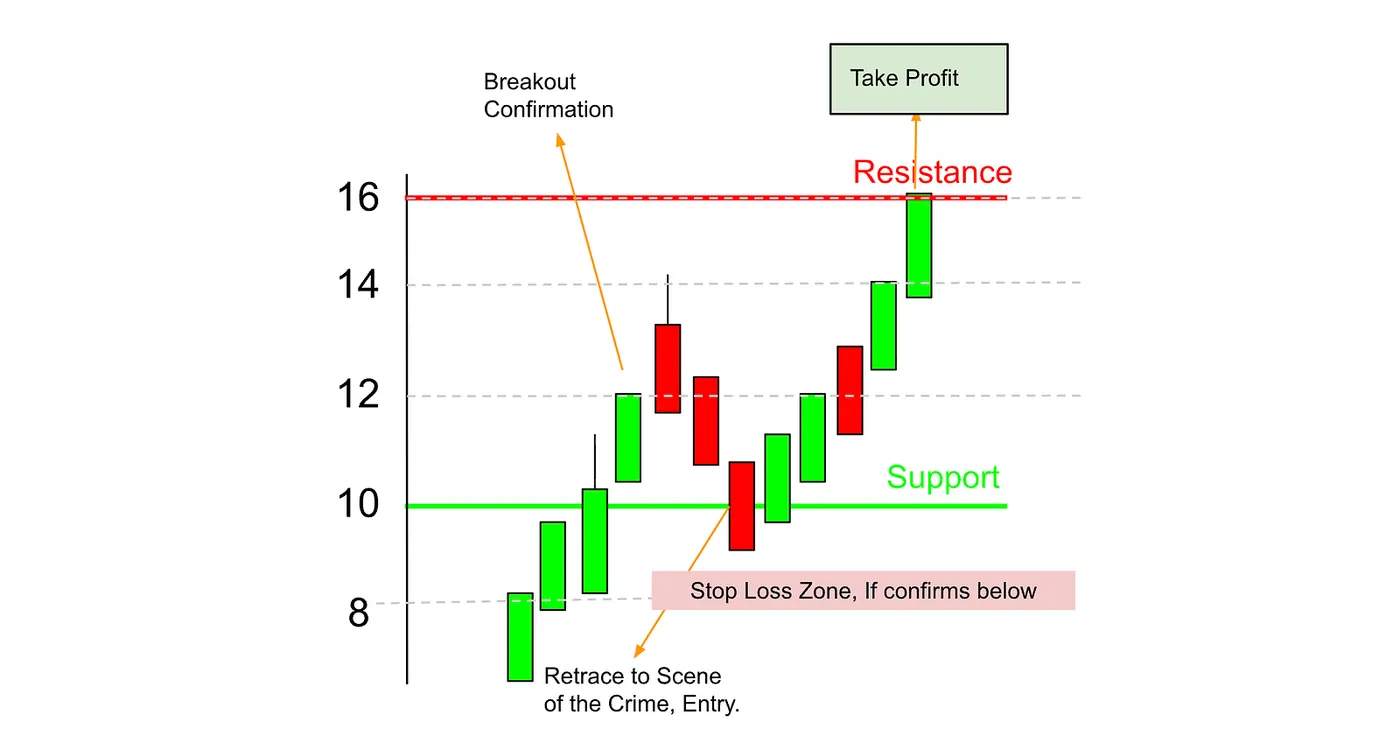
After a stock breaks out, a smart trader doesn’t chase it. They wait for the “retrace to the scene of the crime” — the stock pulling back to a key entry point, $10.
They set a stop-loss for any close confirming below. The price never confirms below the stop-loss and instead, it rallies to a new high.
When it hits the next resistance at $14, they sell and book a nice $4 profit.
The Controlled Exit 📉
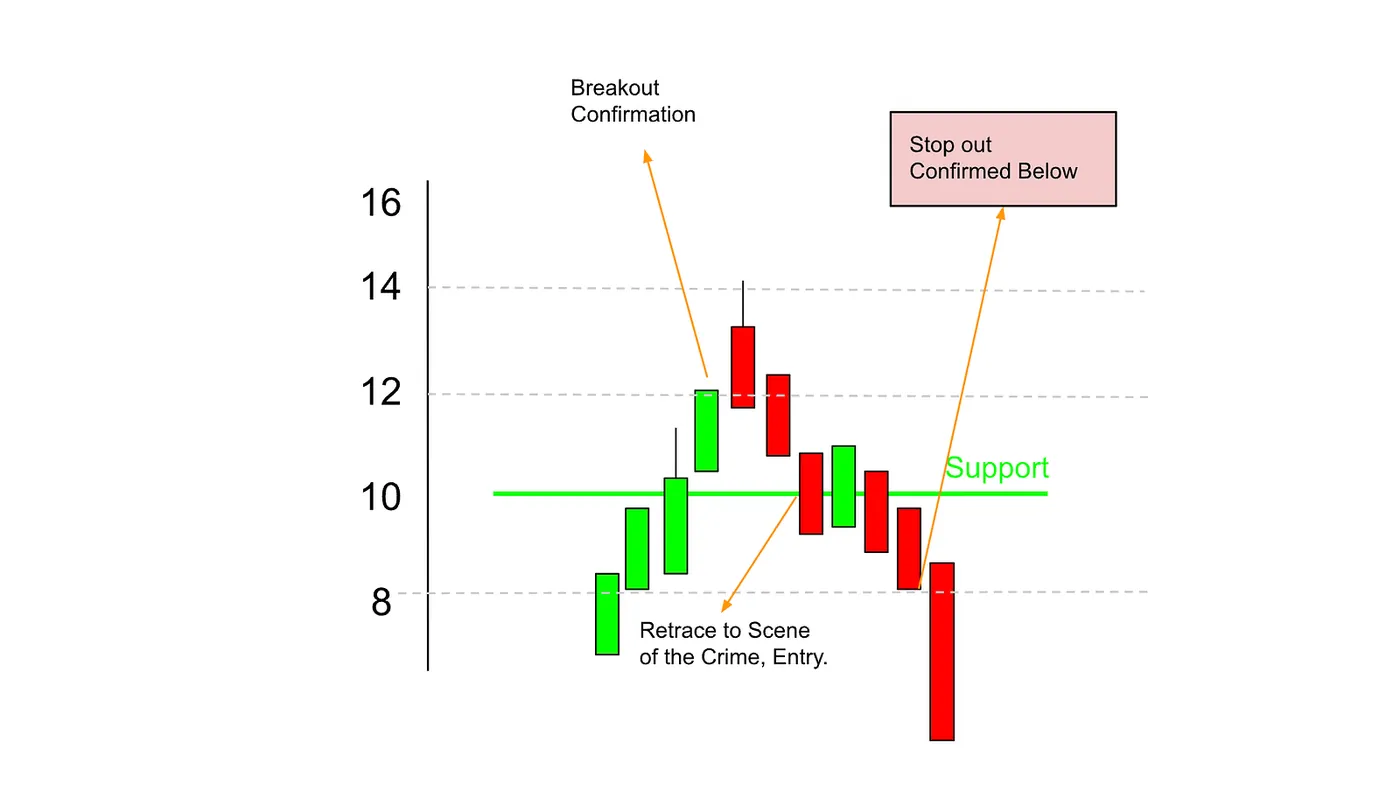
On another day, the same setup happens. A trader enters at $10 and places a stop-loss for the price confirming below.
But this time, the breakout was a “false positive.” The price falls back down, confirming below the new support.
The stop-loss is triggered at $8, and the trader exits the trade, limiting the loss to just $2.
When Price breaks a Key Support📉
Shorting is when you borrow a stock, sell it first, and hope to buy it back later at a lower price to pocket the difference.
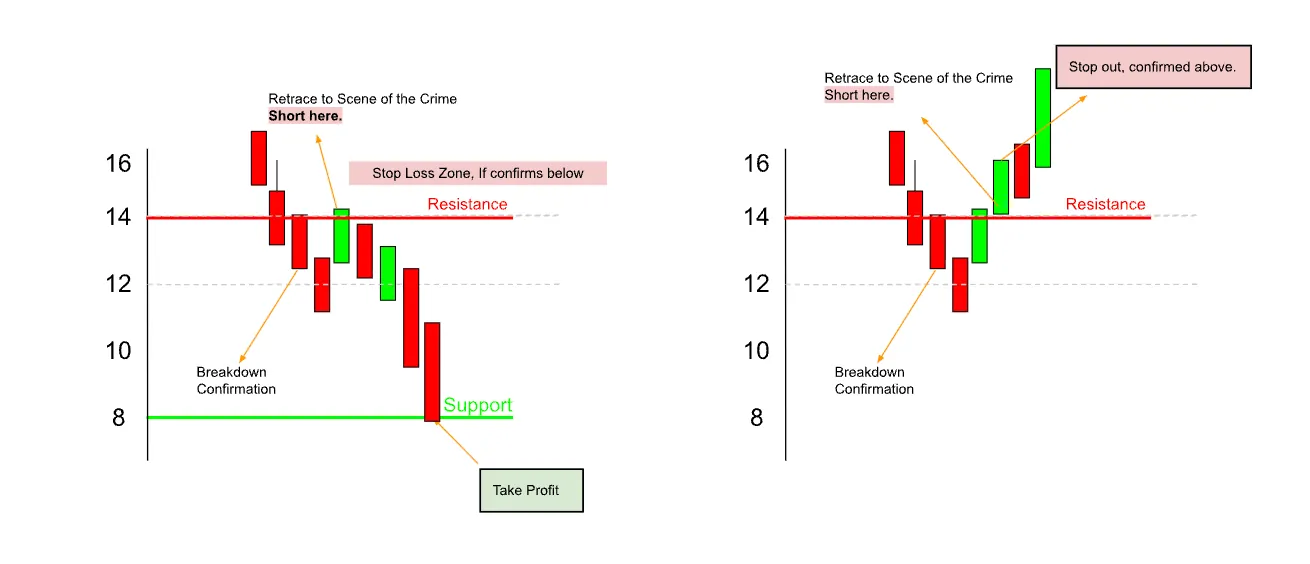
A trader will short a stock (betting its price will fall) when it breaks down and confirms below a support level.
The ideal entry point is on the retrace, where the price briefly pulls back up to the now-broken support, which has become new resistance.
To manage risk, a stop-loss is set for a confirmed breakout back above this new resistance.
Let’s explore some real-world examples to see this concept in action.
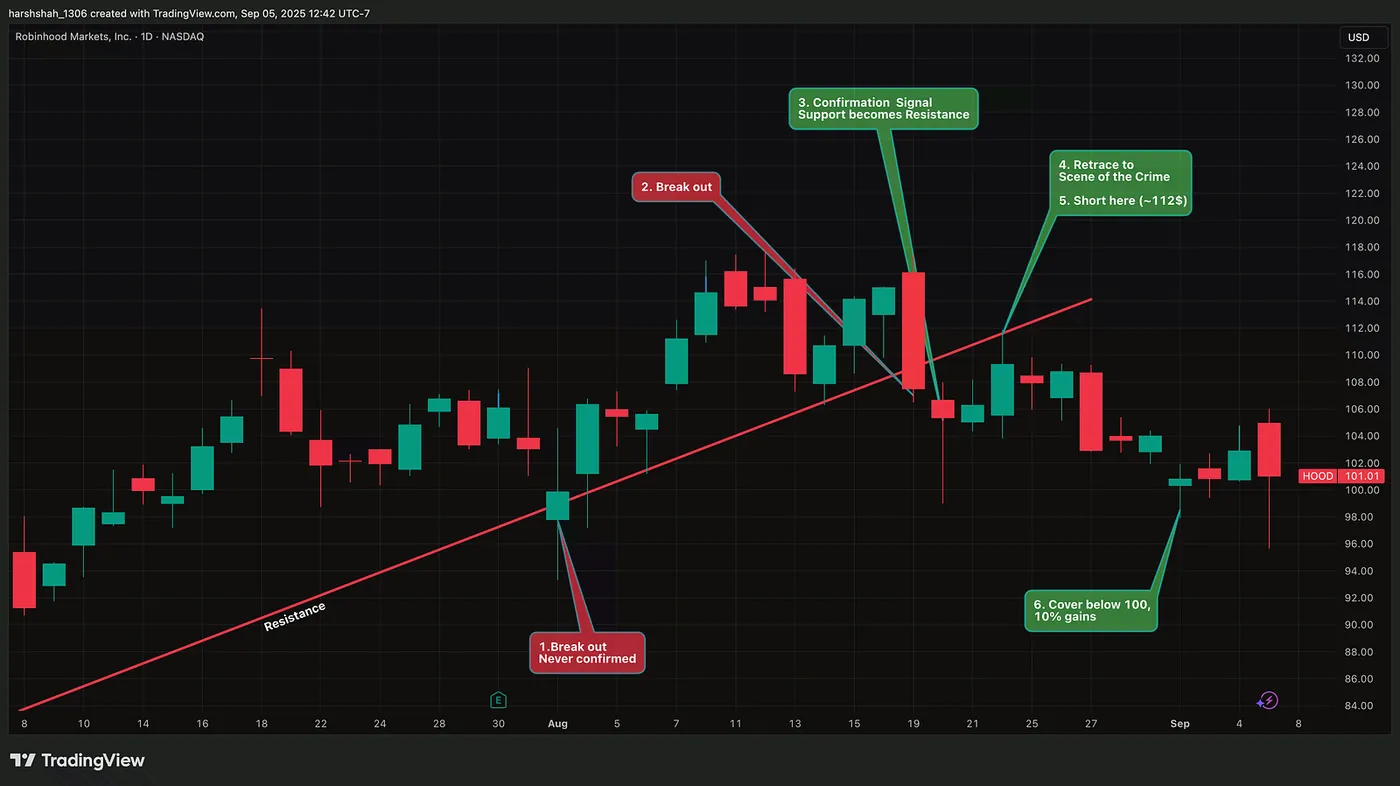
Robinhood — How I made 10% in 5 days
Robinhood stock had been respecting a clear uptrend since April 7th (defined by a consistent pattern of higher highs and higher lows), with the rising lower line acting as solid support.
- In early August, the stock initially attempted a breakdown, hitting a low of ∼$94. Crucially, this move was not confirmed by a subsequent close below that low, indicating the support was still holding.
- The true signal came later. The price tested the uptrend again, dropping to a low of ∼$106.
- This time, the breakdown was confirmed by the following candle’s close at ∼$105.41. This confirmation was key, turning the old support trendline into a new resistance.
- Using the “scene of the crime” retrace method, I anticipated a pullback to this new resistance for a short entry. I executed a short position at ∼$112. My stop-loss was placed just above the trendline — any confirmed close above the resistance would invalidate the setup.
- Five days later, I covered the short position and bought back the shares at ∼$100, locking in the profit of ~10%.
Reddit — The Perfect Setup!
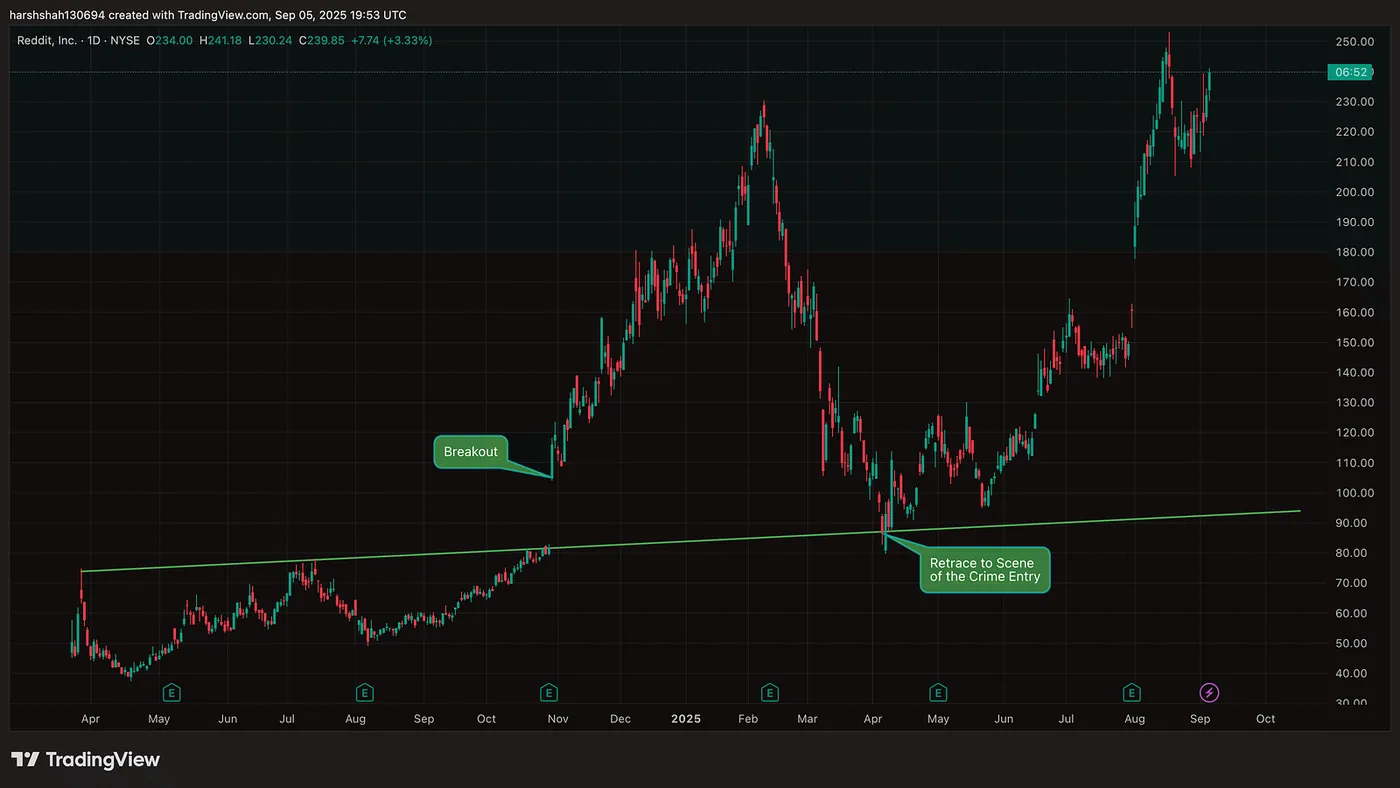
On October 29th, Reddit shattered a key resistance line near the $80 mark, launching a massive rally up to approximately $230. Months later, it pulled back to re-test that exact level — the ‘scene of the crime.’ This provided a textbook setup and a prime opportunity for traders to re-enter the trade.
Enphase — Will it confirm and Retrace ?
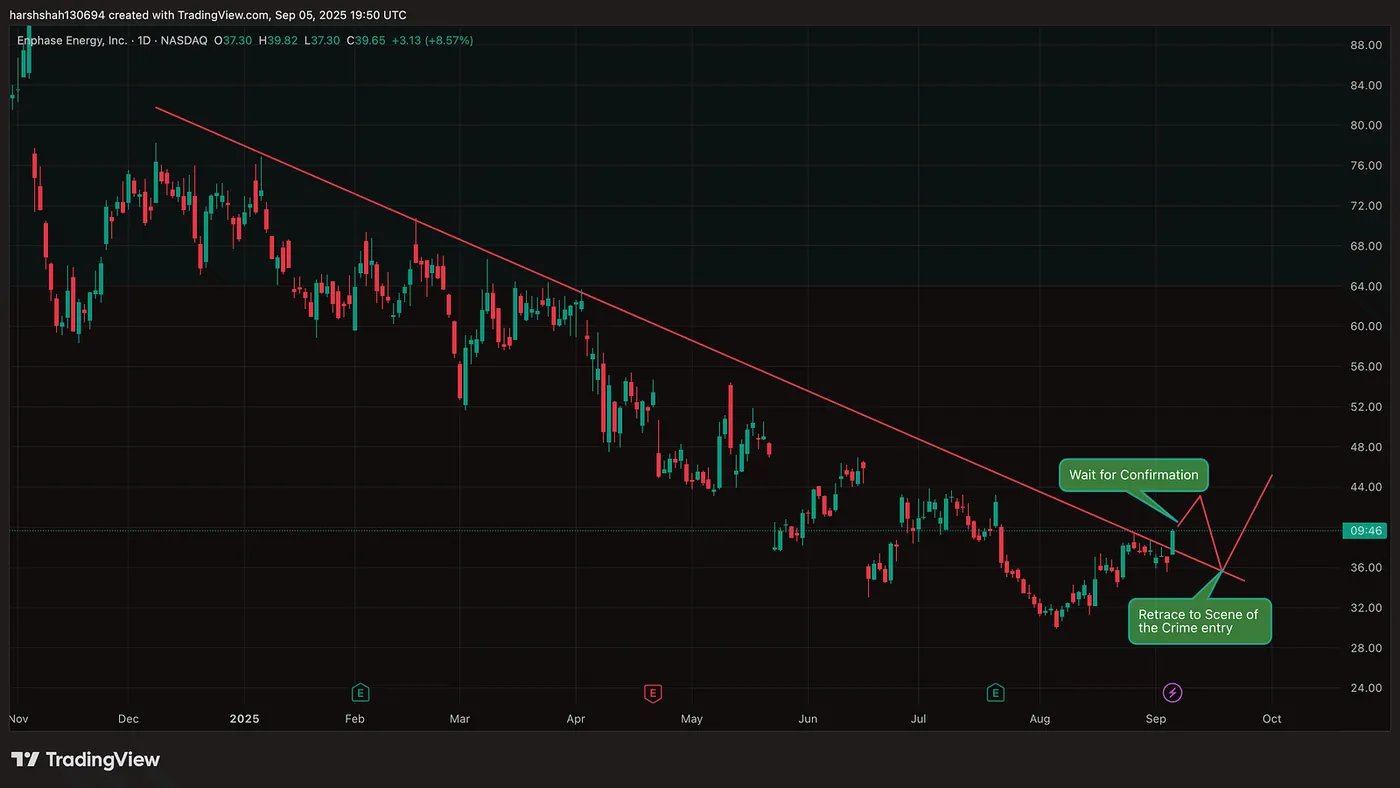
This is a perfect setup! Once the price confirms a close above the resistance line, that line flips to support. The ideal entry is to wait for the stock to retrace back to that new support — the ‘scene of the crime.’
Final Thoughts
The Retrace to the Scene of the Crime isn’t about predicting where the market will go. It’s about letting the market show its hand, then entering with patience at a level where your risk is defined and your reward is favorable.
Don’t FOMO — if you miss one setup, who cares? The market isn’t going anywhere — there will always be another opportunity waiting!